


Your options if your septic system has failed
Finding out your septic system has failed can be overwhelming. But with the right help, it's more manageable than you might think.
This guide explains what a failed system means, what your options look like, and what to do next.
Whatever your situation, we can help you put this behind you — and move forward with confidence.
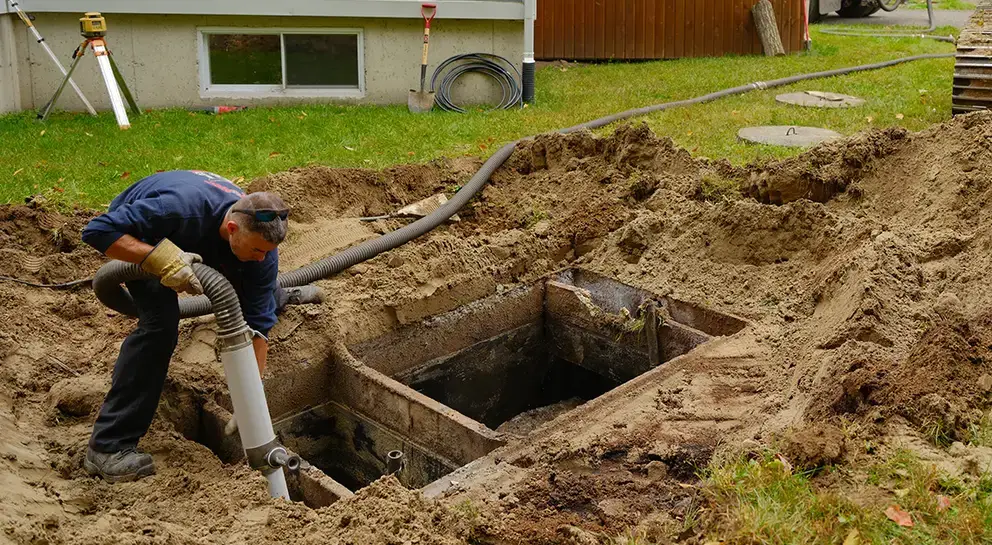
How most homeowners find out their system has failed
There are several ways to learn your septic system has failed or is nearing end of life:
- a technician identified it during a service visit
- a real estate agent or lender flagged it during a property transaction
- you discovered it after you moved into a new home
- your local health department issued a notice requiring you to repair or replace your system
- you had suspicions and arranged an inspection, which confirmed the problem
If any of these apply to you, you're in the right place.

What system failure actually means
A failed septic system may not look the way you expect.
In some cases, failure is impossible to ignore — sewage backing up into your home or wastewater surfacing in your yard. In others, a system can appear to be functioning normally until an inspection reveals a serious problem.
Whatever the severity, the underlying issue is the same: your system is no longer treating and dispersing wastewater as it should.
The most common cause of failure is the drain field. Some drain fields were never installed correctly in the first place — the wrong design, the wrong depth, or the wrong soil conditions from the start. Others have simply reached the end of their working life.
Septic tanks fail too, though less often. Even properly installed concrete and plastic tanks break down over time. In some cases, the structure collapses entirely.
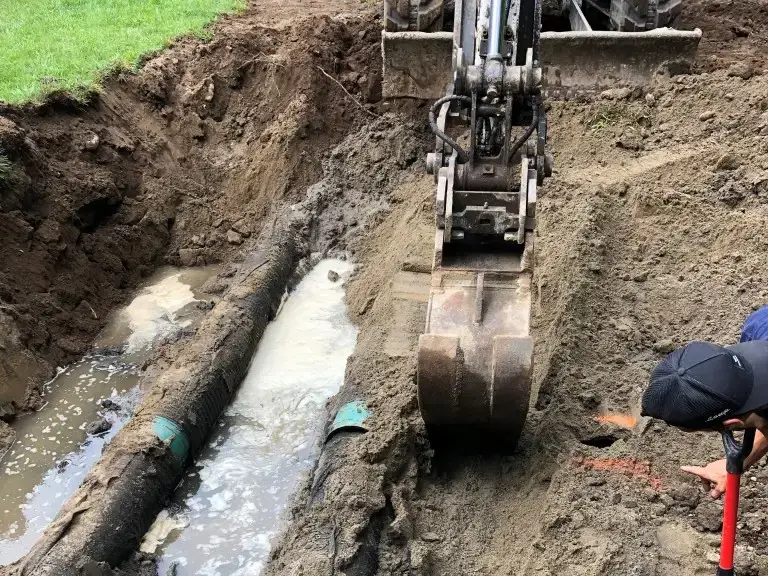
A failed system needs attention right away
A failed septic system doesn't wait. The longer it's unresolved, the more complex and expensive the solution becomes.
It's also a health and environmental risk. Improperly treated wastewater in your yard can expose your family and pets to pathogens. If it reaches water sources, the harm extends even further.
There's a financial side too. If you sell your property, you must disclose a failed system to prospective buyers. By dealing with it now, you won't be forced to act — or lower your asking price — under the pressure of a sale.

The most common ways to resolve a failed system
When a septic system fails, the first question is often the same: how do I solve the problem?
The answer is that it depends. In some cases, targeted repairs can bring your system back to working order. But when your system has reached the end of its life, or when the failure is too extensive, replacement is the right call.
For most homeowners, there are three paths forward:
- Replace your drain field
If your septic tank is in good condition, you may need only a new drain field. This requires sufficient space and suitable soil. If space is limited, the Ecoflo compact biofilter can reduce the size of the drain field you need. - Replace your septic tank
If your drain field is in good shape but your tank is collapsed, corroded, or beyond repair, you may be able to replace it without disturbing the rest of the system. - Replace your entire system
When both your drain field and septic tank have failed, or when site conditions make a partial replacement too difficult, a full replacement is needed. What the new system looks like will depend on your site and its conditions.
You need a clear picture of your property to know which path is right for you — and that's what our free site evaluation is for.
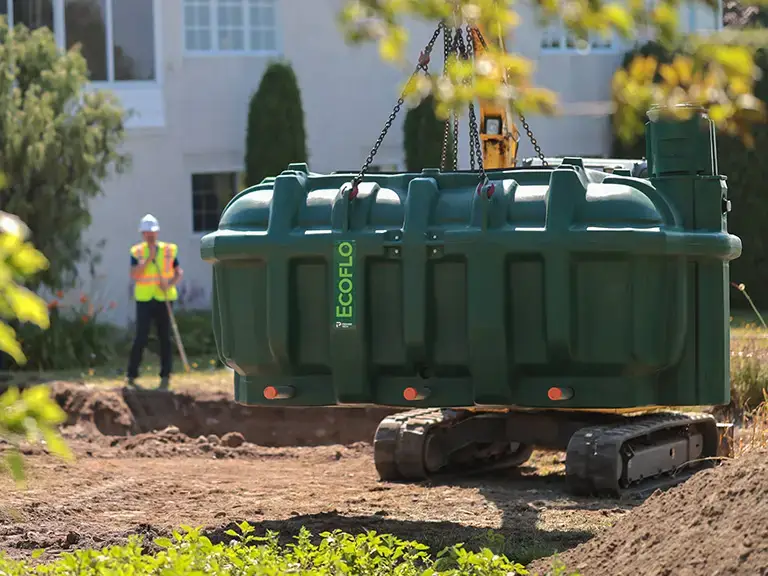

We'll give you straight answers
Our site evaluation is the first step to resolving your failed system. We assess your land and give you a clear picture of your options.
The visit is free, and there's no obligation to proceed.
