What is soil testing for a septic installation?
Soil testing is an essential step in any septic installation project. The results determine whether your property can support a conventional drain field — or whether an advanced treatment system is needed.
The process involves two tests:
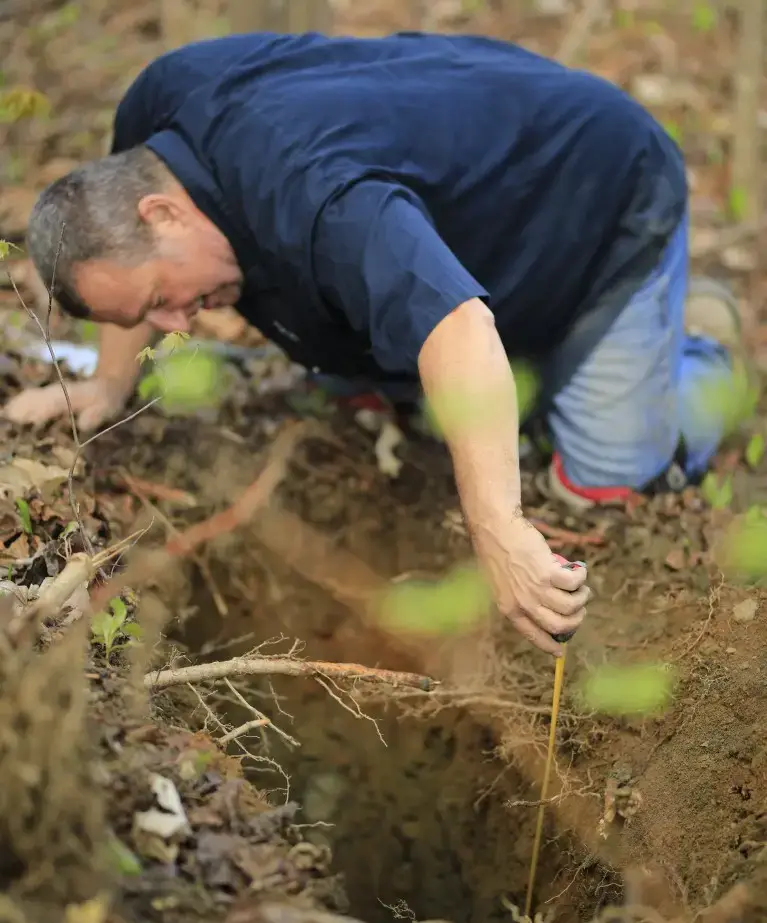
- The deep probe test checks how deep your soil goes before hitting a layer that limits drainage.
- The percolation test — or perc test — measures how quickly water moves through your soil.
Together, the results give your septic designer everything they need to specify the right system for your property.
Soil testing requirements vary by state and county. We know how it works in your area. When you come to us, we handle the coordination — finding the right specialist near you, arranging the visit, and making sure the results reach the right people.
Contact us first and we'll make sure this step goes smoothly and your project moves ahead without delays.
How soil testing works
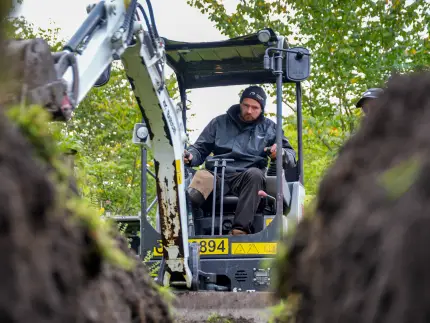
Two soil tests take place on your property, typically in the area where your drain field will be located:
- Deep probe test
A technician digs test pits to determine how deep your soil goes before hitting bedrock, groundwater, or a layer that would prevent proper wastewater treatment. That depth determines what type of system your property can support. - Percolation test
Small holes are dug in the proposed drain field area. The holes are filled with water and left to saturate. The rate at which the water level drops tells your designer how large your drain field needs to be — and whether a conventional system is the right fit.
The exact process depends on where you are. We'll confirm who needs to carry out the tests, arrange the visit, and make sure everything is done according to the standards required in your area.
What soil testing costs
The cost of soil testing depends on where you live, who carries out the tests, and what your site needs. It can vary a lot, even between neighboring counties.
We work with trusted local specialists across our service areas, so you don't need to go through the hassle of finding one yourself.
We can also schedule your testing, manage the paperwork, and make sure the results are submitted correctly — one point of contact for the entire soil testing process, from first call to final results.
Get in touch and we'll give you a price estimate and clear path forward based on your location.
Soil testing expertise you can rely on
We have been working with septic systems in the USA for more than 30 years.
We aren't just experts in soil testing. We manufacture treatment technologies, coordinate installations, and service all system types.
We understand the full picture in a way that other service providers can't.
When you ask us to coordinate your soil testing, you get:
- a septic specialist, not a general contractor
- experience with challenging sites, including small lots and land with poor soil or high groundwater
- one team to guide your project from first assessment to installation and service, if you choose