Why do Ecoflo septic systems use a coconut husk fragment filter?
Last updated on March 17, 2026

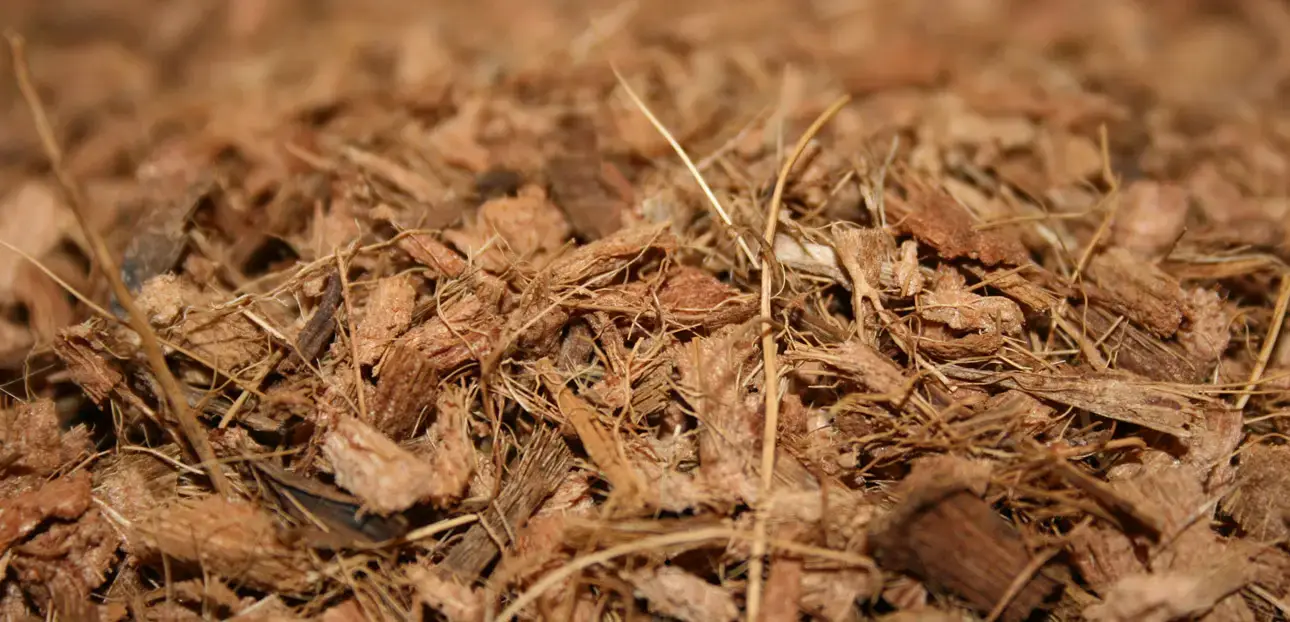
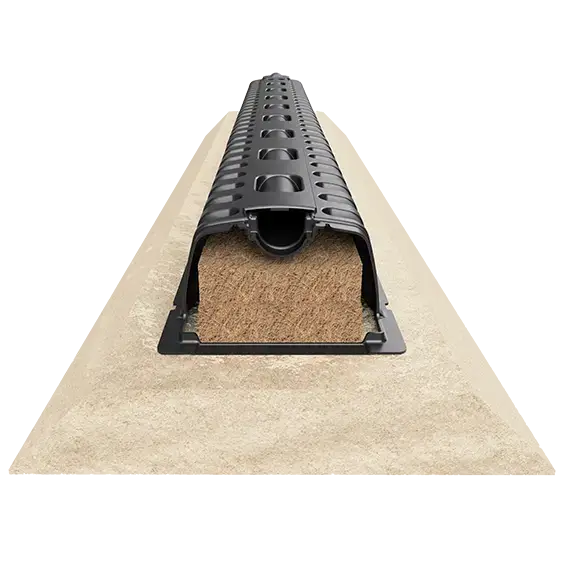
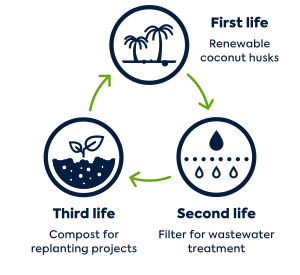
By transforming fragments of coconut husk into a filtration medium, we give a second life to a valuable resource and ensure that no part of the fruit goes to waste.
The all-natural product we create is not only renewable, but also fully compostable after its years of use in wastewater treatment.
Coconut fragments also offer an advantage in terms of CO2 emissions. Compared to other filtration media such as sand, coconut is much lighter and requires far less material to treat the same volume of wastewater. Less material means less transportation — and therefore a reduced carbon footprint, from our factories to the installation site.
Fragment particle size
Coconut husk fragments are produced by cutting up the husk that surrounds the fruit of the coconut. This mechanical process gives us control over the size of each fragment and overall porosity, guaranteeing a uniform filtering medium that delivers consistently high performance over time.
The structure of coconut husk fragments contains fibres that are interconnected by parenchyma, a natural binder that has a high absorption capacity.
This unique characteristic gives the filtering medium exceptional stability, an advantage that helps Ecoflo overcome two of the main challenges faced by on-site wastewater treatment systems: variable load conditions and frequent periods of non-use.
Mechanical resistance
Due to their structure, all organic filter media naturally break down over time. This process compresses the pores that are essential to wastewater treatment and gradually degrades the medium’s filtering properties until it is no longer effective.
In that respect, coconut husk fragments make an ideal filter medium because they contain a high proportion of lignin, a compound that is particularly resistant to biodegradation.
The material’s rigidity and low degradability help the filter medium retain its three-dimensional structure and porosity over time, allowing it to maintain its filtering performance throughout the life of the bed.


Want to know if Ecoflo is right for you?
Our septic system experts are waiting to hear about your project!
Share your ideas with us and we’ll recommend the best solution for your home, cottage, or business.