Is it possible to have a septic tank without a drainage field?
Last updated on 19 February 2026

A standard septic system works in two main stages:
- Septic tank
Your septic tank receives wastewater from your home. It retains solids and scum so they can be removed later. Liquid wastewater exits the tank and flows through a pipe to your drainage field.
- Drainage field
Your drainage field (sometimes called a percolation area or a soakaway) finishes the treatment process. It allows wastewater to filter through your soil, where bacteria remove pathogens and pollutants. By the time wastewater reaches groundwater, it’s safe for the environment.
Without a functioning drainage field, wastewater isn’t fully treated. That’s why a standard septic tank cannot legally operate without a drain field in the UK.
Reasons why a typical drainage field might not be possible
Installing a septic drainage field is straightforward for many property owners. But for others, site constraints present a real challenge.
A typical drain field may not be an option for you due to:
- Limited space
Your property may be small or irregularly shaped, leaving no room for a compliant drain field.
- Challenging soil conditions
Rocky ground, heavy clay, or a high water table can prevent wastewater from dispersing safely.
- Environmental restrictions
Your site may not meet Environment Agency or local authority requirements for minimum distances from wells, watercourses, or buildings. For guidance on siting and separation distances, see our article on General Binding Rules and minimum distances for small sewage systems.
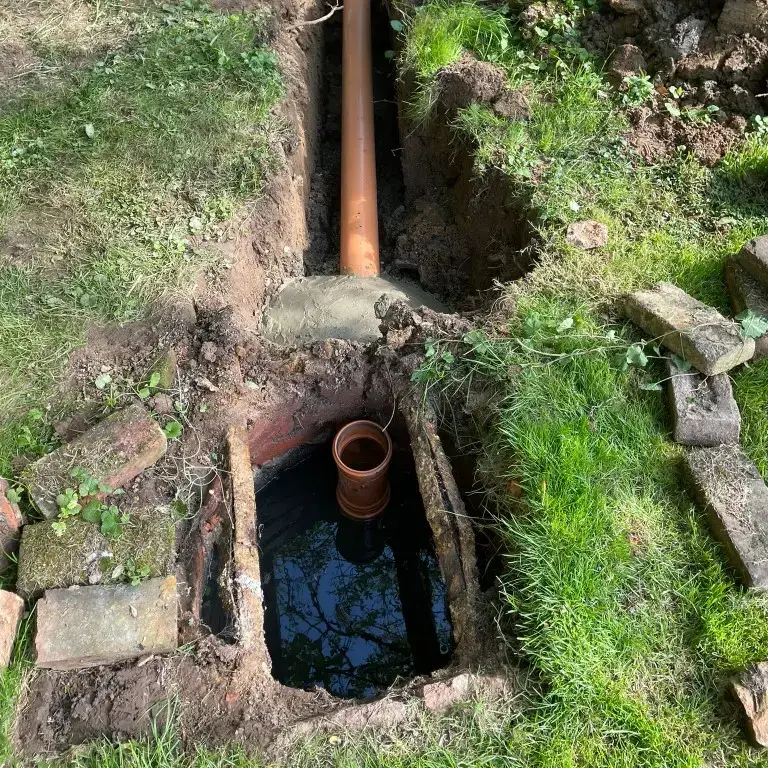
A non-compliant septic tank with piping to a drain field, where wastewater is dispersed into the ground.
If you can’t install a standard drainage field on your site, you have two options:
- Connect to mains sewer
While this is a guaranteed solution, it’s not practical if you live in a remote area. Costs can also be very high. Standard connection charges from UK water companies typically start in the low thousands of pounds, but when you factor in trenching, pipework, reinstatement, and permits, total costs can sometimes run into tens of thousands of pounds.
- Install a sewage treatment plant
Treatment plants treat wastewater to a higher standard than conventional septic systems. They allow you to comply with UK regulations without relying on a traditional drainage field. Among these products, the Ecoflo compact biofilter stands out as the reliable, proven solution trusted by homeowners across the UK — and around the world.
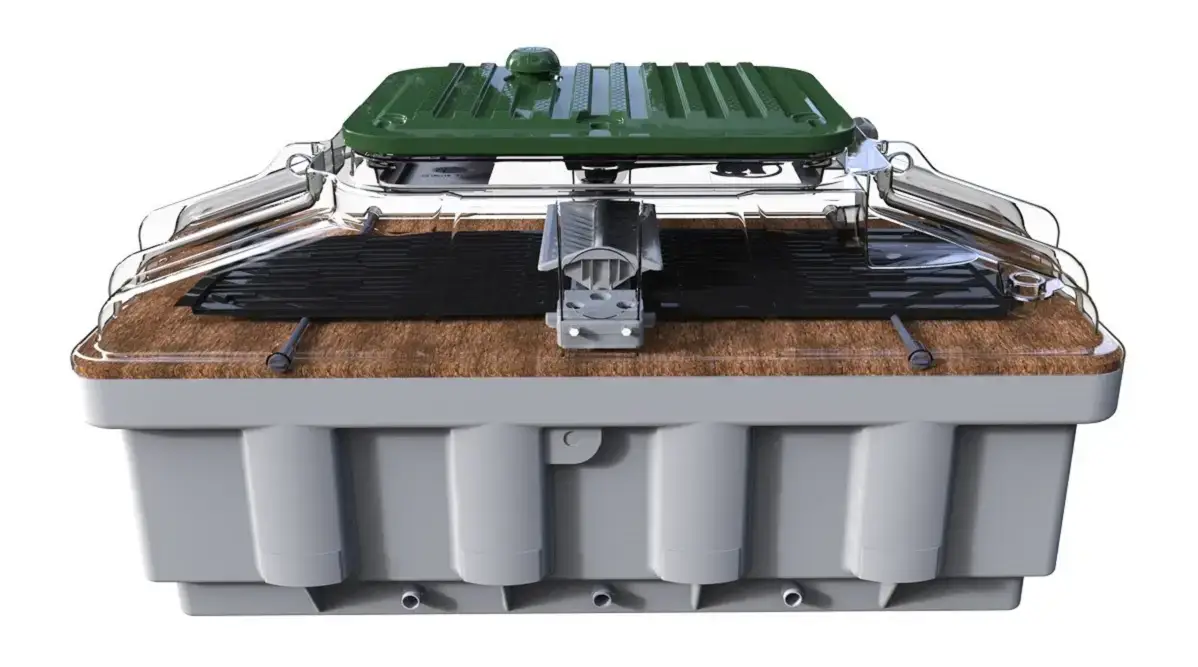
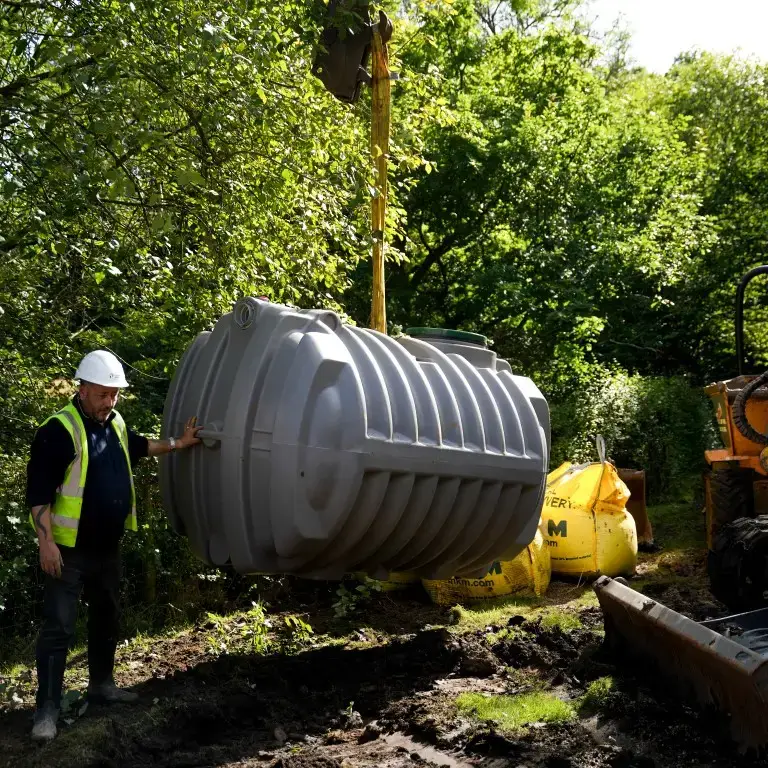
The Ecoflo sewage treatment plant, manufactured by Premier Tech Water and Environment.
The Ecoflo compact biofilter is designed for situations where space or soil conditions make a standard septic drainage field impossible.
Instead of relying on your soil, the bulk of wastewater treatment happens inside the biofilter itself. In effect, Ecoflo replaces the role of a full-sized drain field, while still allowing for compliant discharge in conditions where a standard system cannot be installed.
Here’s what it means for you:
- If you have a small or constrained site
Because the bulk of wastewater treatment happens inside the biofilter, your drainage field can be smaller. This makes Ecoflo ideal for sites where a conventional drain field simply won’t fit.
- If you have rocky or clay-heavy soil
Rocky ground and clay soils do not allow effluent to properly disperse in a traditional drain field. Ecoflo treats wastewater to a high standard before discharge, reducing your reliance on soil permeability.
- If you have a high water table
When groundwater levels are high, the Ecoflo system helps minimise environmental risk by treating wastewater before it enters the ground, keeping your property compliant with UK regulations.
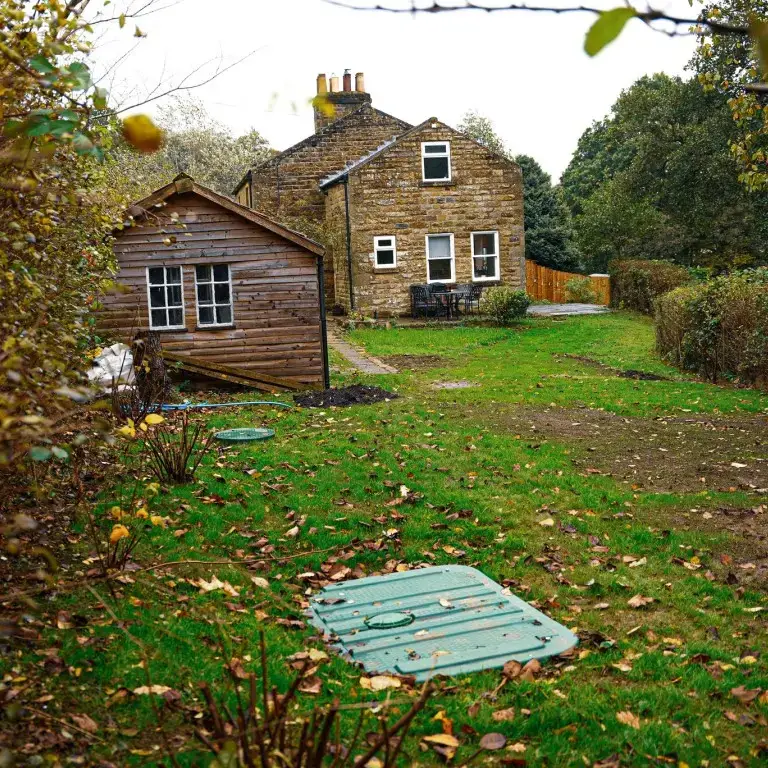
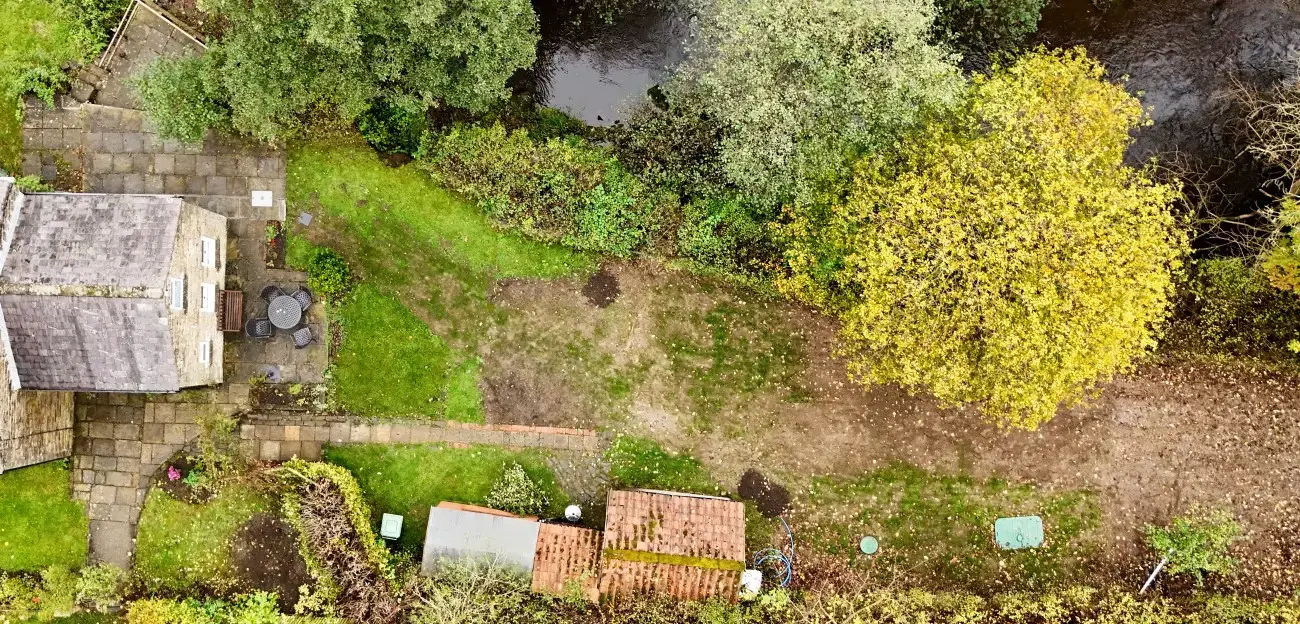
The Ecoflo compact biofilter (rectangular lid) connected to a septic tank (round lid) in a garden with limited space for a drain field.

Struggling with a limited or failing drainage field?
Share a few details and we'll help you find a solution that works for your property — whether that's a repair, a replacement, or a more compact alternative.