


Your options if you need a septic system for a new build
Choosing an off-mains system for a new build raises a lot of questions. What's required? What's the process? Where do you start? But with the right help, it's simpler than it might seem.
This guide explains the rules and steps for new constructions, what your options look like, and what to do next.
Whatever stage your project is at, we can help you sort your system — so you can focus on your dream home.

What the rules say about off-mains systems for new constructions
Your first question is probably: what kind of tank do I need for my new build? It's the right question, but the answer starts with UK regulations, not products.
The regulations that govern off-mains systems in England and Wales are called the General Binding Rules. New-build systems must meet these regulations from day one.
For most new builds, the most straightforward way to meet these regulations is to install a sewage treatment plant. It treats wastewater to a higher standard than a septic tank and gives you two discharge options: a drainage field or a nearby watercourse.
What your plot can support, and what your local authority will accept, depends on the results of the planning and approvals process.

To meet the General Binding Rules, most new builds require a sewage treatment plant.
The process to get a septic system for your new build
When you're planning a new construction, it's natural to focus on the exciting decisions first. But your septic system needs to be confirmed — at least on paper — before your project can move forward.
That means the site assessment, soil testing, and design for your off-mains system need to happen before your plans go to your Local Planning Authority. Getting this sorted early keeps your build on track. Leaving it to the last minute risks delays that compound down the line.
Here's how the drainage process fits into a typical new build:
- A drainage specialist visits your site and carries out a site assessment. This confirms whether your plot can support an off-mains system and what type of system is likely to be needed.
- A technician checks your site's groundwater level and measures how quickly water drains through your soil. The results determine the size and design of your drainage field.
- A drainage specialist designs your system based on the results of your site assessment and soil tests. This design forms part of your planning application.
- You submit your planning application to your Local Planning Authority, which assesses the impact of your system on the surrounding area. Once permission is granted, your build can begin.
- Your septic installer applies for Building Regulations approval before installation begins. This confirms that the planned work meets the technical standards in Approved Document H.
- A licensed company installs your off-mains system during your build.
- A Building Control Officer visits your site to inspect the installation. When satisfied, they issue your Completion Certificate — a document you need if you ever sell your property.
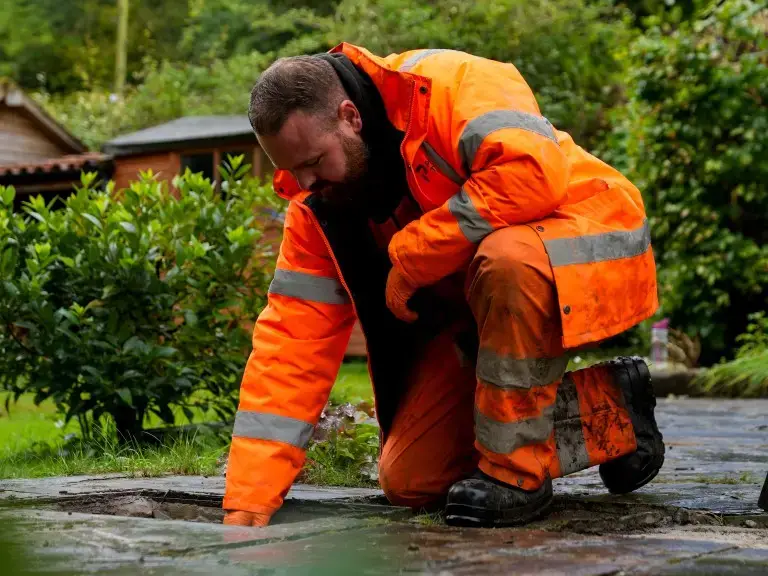
A site assessment is the first step in your off-mains installation project.
The most common off-mains systems for new builds
When it's time to think about tanks and brands, your site assessment and soil tests will have already confirmed the type of system your site can support.
That said, most new builds follow one of two paths:
- A sewage treatment plant with a drainage field
This is the most common configuration for new builds in the UK. The treatment plant processes your wastewater on site and then disperses it into the ground through a drainage field installed on your plot. - A sewage treatment plant with an alternative discharge route
If a drainage field isn't possible — because of soil conditions, available space, or proximity to groundwater — you may be able to discharge wastewater into a watercourse if it's properly treated. This requires an Environmental Permit and is less common, but it is a viable path for some plots.
Either way, you first need a drainage specialist to look at your property. That's exactly what our free site assessment is for.
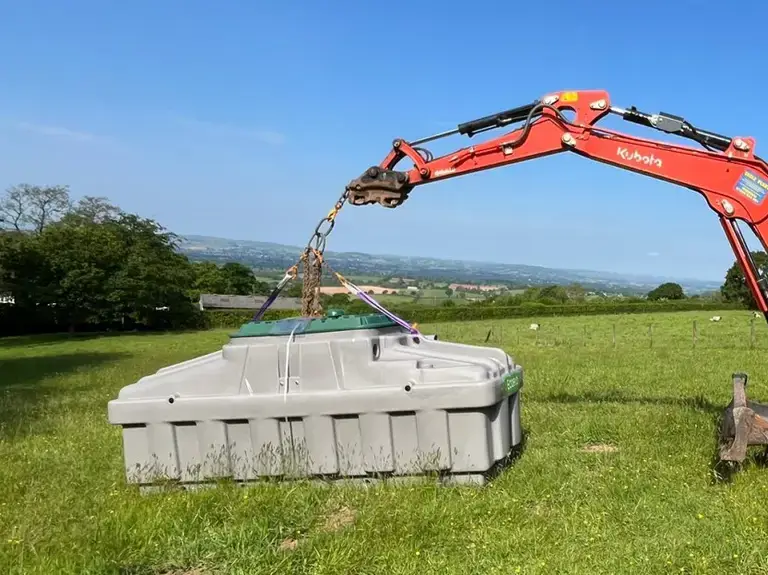

You focus on the build — we'll handle the drainage system
From soil testing to system design, planning support, and excavation, we can manage every aspect of your septic installation project. Our free site assessment is the first step.
