
Tertiary treatment is required in situations where conventional or secondary septic systems can’t provide sufficient wastewater treatment.
Here are some common scenarios:
- Limited soil or high bedrock
If your property’s soil quality does not allow for a septic drain field (often called a leach field), a tertiary treatment system may be required to ensure wastewater is properly treated before being discharged into the environment. - Proximity to sensitive ecosystems
If your property is near a lake, river, or other sensitive body of water, you may need a tertiary system to protect water quality. Otherwise, high levels of nitrogen, phosphorus, and pathogenic bacteria in wastewater can contribute to algae blooms and other harmful water quality issues. - Strict local regulations
Your local regulations may demand higher levels of treatment to protect ecosystems, human health, and meet environmental standards.

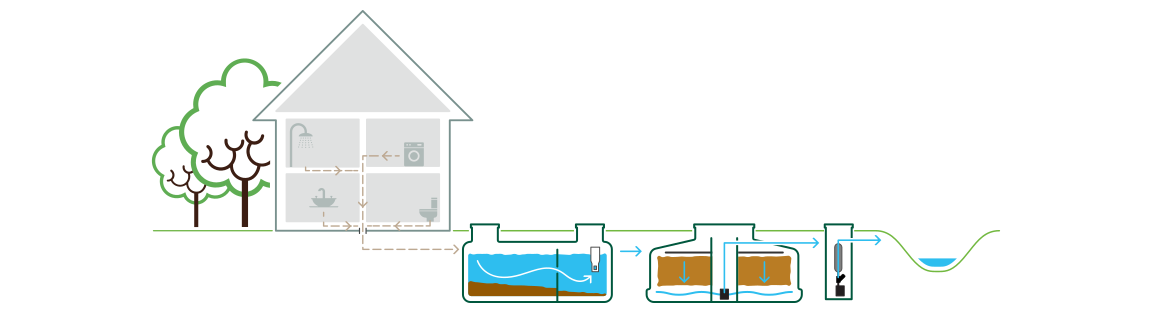
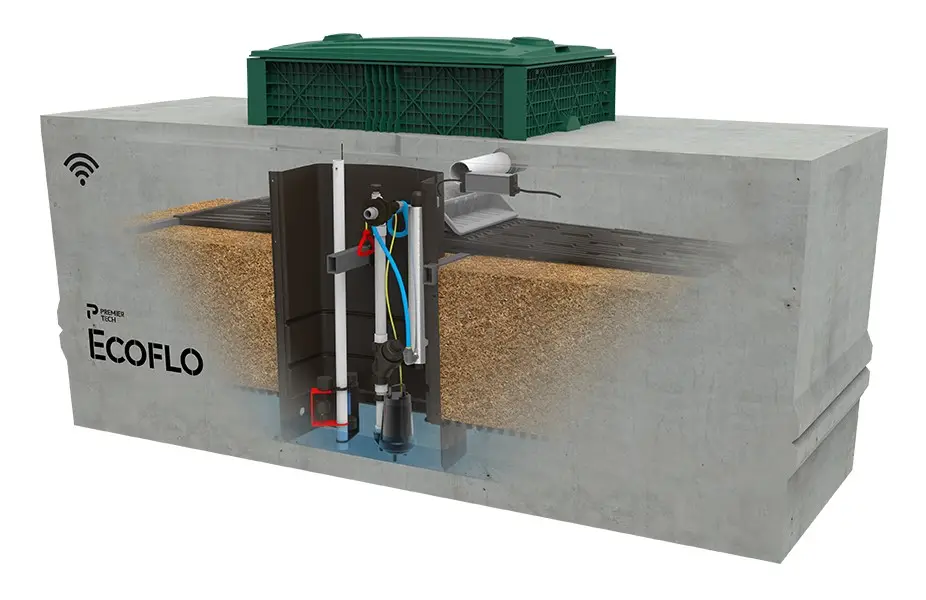
Our UV disinfection system (DiUV) uses ultraviolet light to kill harmful microorganisms in wastewater, including bacteria, viruses, and parasites. It’s an effective method to ensure that treated wastewater is pathogen-free.
UV disinfection systems are ideal for sites with limited space or inadequate soil conditions for a conventional septic drain field. They are commonly used with stream discharge — a method that sends effluent into a watercourse or ditch.
How UV systems work
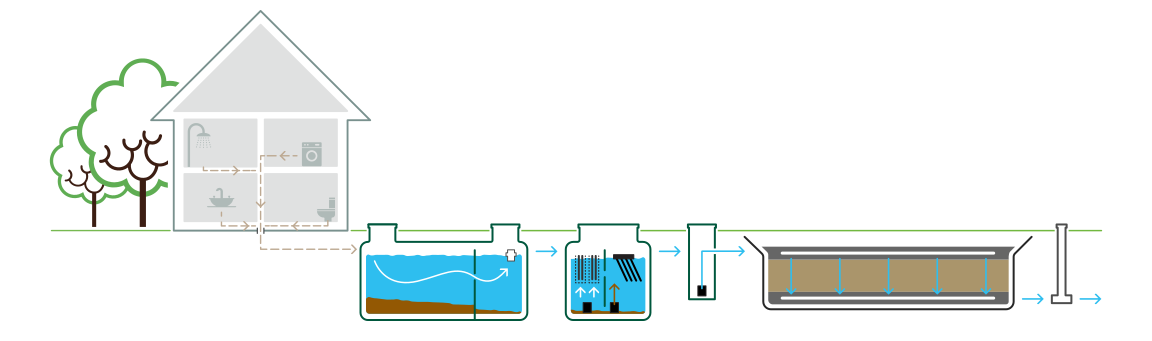
Wastewater passes through a septic tank and an advanced secondary treatment system (like the Ecoflo compact biofilter) before reaching the UV disinfection unit.
Inside the unit, wastewater flows through a treatment chamber where light from a UV bulb inactivates pathogens by disrupting their DNA. The process ensures that treated wastewater is safe for the environment.
Components of a UV system
Our UV disinfection system has these components:
- UV bulb: Emits UV rays that kill harmful microorganisms.
- Treatment chamber: The chamber where the water flows and is exposed to UV light.
- Quartz sleeve: Protects the UV bulb from water contact.
UV system maintenance
UV disinfection system maintenance is in addition to septic tank pump-outs, which are normally required every 3 to 5 years.
Our annual maintenance for our UV disinfection system includes:
- Bulb replacement: As a precaution, the UV bulb is replaced every year to ensure it always functions properly.
- Quartz sleeve cleaning: The quartz sleeve protecting the UV bulb can accumulate mineral buildup. It must be cleaned to ensure maximum UV effectiveness.
- Sampling: Local regulations may require ongoing samples to test the system’s treatment performance. These requirements are most common in areas near sensitive ecosystems or watercourses.
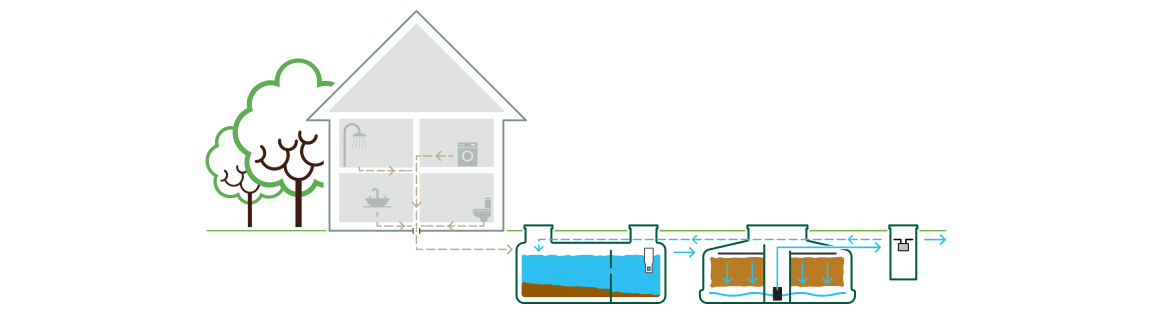
Our nitrogen reduction models of the Ecoflo compact biofilter convert ammoniacal and organic nitrogen in wastewater into nitrogen gas, which is harmless to the environment.
This type of tertiary treatment system is important in coastal areas or where nitrogen levels are strictly regulated. Improperly treated effluent in these regions could lead to water quality issues like eutrophication and algae blooms.
How nitrogen reduction systems work
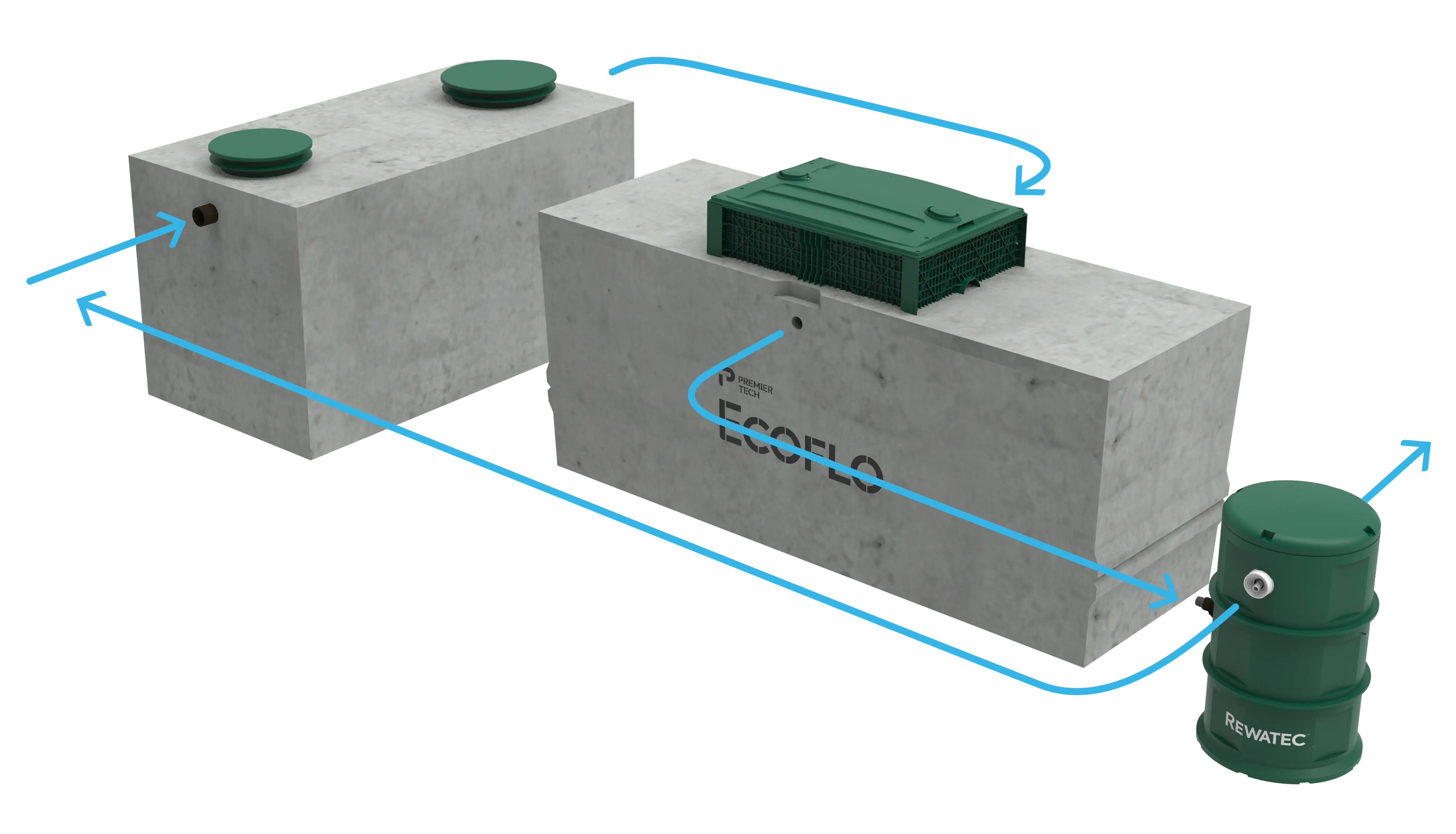
Raw wastewater enters a septic tank where solids settle.
Liquids flow out of the septic tank and into the Ecoflo compact biofilter, our secondary treatment system. Here, wastewater percolates through a coco filter. Ammoniacal and organic nitrogen transform into nitrates through a process called nitrification.
Treated wastewater then flows into a divider tank. One portion is recirculated back to the septic tank, where nitrates transform into nitrogen gas through a process called denitrification. The gas evaporates into the air.
The flow divider safely discharges the remaining treated wastewater into the environment.
Components of a nitrogen reduction system
Our nitrogen reduction system has these components:
- Septic tank: Clarifies wastewater by removing solids.
- Ecoflo compact biofilter: Filters wastewater through coco and transforms harmful nitrogen compounds into nitrates.
- Flow divider: Separates wastewater into three parts for discharge or further treatment.
- Infiltration zone: Safely returns treated water to the environment.
Nitrogen system maintenance
Nitrogen reduction system maintenance is in addition to septic tank pump-outs, which, in most cases, are required every 3 to 5 years.
Our annual maintenance for nitrogen reduction systems includes:
- Ecoflo compact biofilter maintenance: The Ecoflo tank is checked every year for cracks or damage. The service technician also aerates and scarifies the filter to maximize its treatment efficiency.
- Flow divider inspection: The flow divider is inspected every year to verify its performance.
- Sampling: In some regions, effluent sampling may be required to ensure the system meets treatment standards.
Phosphorus removal systems
Phosphorus removal septic systems reduce concentrations of phosphorus, a nutrient that can cause water pollution and contribute to algae blooms in lakes and rivers.
These systems are needed when effluent is discharged near lakes (or watercourses that are upstream of a lake). They prevent excess phosphorus from accumulating in the environment, protecting ecosystems from the damaging effects of eutrophication.
How phosphorus removal systems work
There are several phosphorus removal technologies on the market, and each works a bit differently. To keep things simple, we’ll focus only on systems that use electricity to trigger chemical reactions.
Here’s how these systems work:
- Primary treatment
Wastewater first flows into a primary reactor where solids settle. The clarified liquid then exits through a pipe for further treatment.
- Electrocoagulation unit
The clarified liquid enters a tank called an electrocoagulation unit, which has two chambers: a reaction zone and a separation zone.- Reaction zone: Submerged electrodes release aluminum particles. These particles react with phosphorus, turning it into solid compounds.
- Separation zone: The new solid particles settle at the bottom and are pumped back into the primary reactor as sludge.
- Discharge: Clarified wastewater forms at the top and is discharged to an infiltration area or another system for further treatment.
Components of a phosphorus removal system
Phosphorus removal systems that use electricity often have these components:
- Primary reactor: Clarifies wastewater before treatment.
- Electrocoagulation unit: Transforms phosphorus into solid compounds, which then settle at the bottom of the tank.
- Aluminum electrodes: Connect to a direct current and sit in a wire cage where wastewater freely circulates.
- Agitating pump: Helps circulate wastewater within the electrocoagulation unit.
- Sludge pump: Returns phosphorus-laden sludge back to the primary reactor for removal.
- Discharge area: Safely returns treated water to the environment.
Phosphorus system maintenance
You can expect the following maintenance with a phosphorus removal septic system:
- Sludge removal: Accumulated sludge in the primary reactor is pumped as often as needed to protect the system’s treatment performance.
- Electrode inspection: The aluminum electrodes are inspected every year to check if they need to be replaced.
- Pump inspection: The pump is inspected every year to verify the system’s pumping and discharge performance.
- Sampling: Local regulations may require regular testing of a system’s effluent to verify its performance, especially near sensitive bodies of water.
A tertiary treatment project involves more than just the system’s installation. In most cases, the process follows these steps:
- Site evaluation
A septic designer or engineer visits your property to determine the best location for your system and evaluates factors like soil quality, water table levels, and local regulations. - System design
Based on the site assessment, the septic designer or engineer tells you which technologies are most suitable for your treatment needs. They design a plan for the septic system after you choose your products. - Permits
When your plans are ready, you can apply for required permits. These may include discharge permits or construction permits, depending on where you live and the regulations in your area. - Installation
Once permits are approved, the installation of your septic system can begin. The installation includes the setup of your septic tank, secondary treatment system (if required), and tertiary treatment system. - Inspection and testing
After installation, the system is tested to ensure it operates efficiently and meets regulatory standards for effluent quality. - Use and maintenance
All tertiary treatment systems require regular maintenance. Routine maintenance visits are often required to ensure continued compliance with environmental standards.