What is the best septic system if you fail a percolation test?
Last updated on September 16, 2026
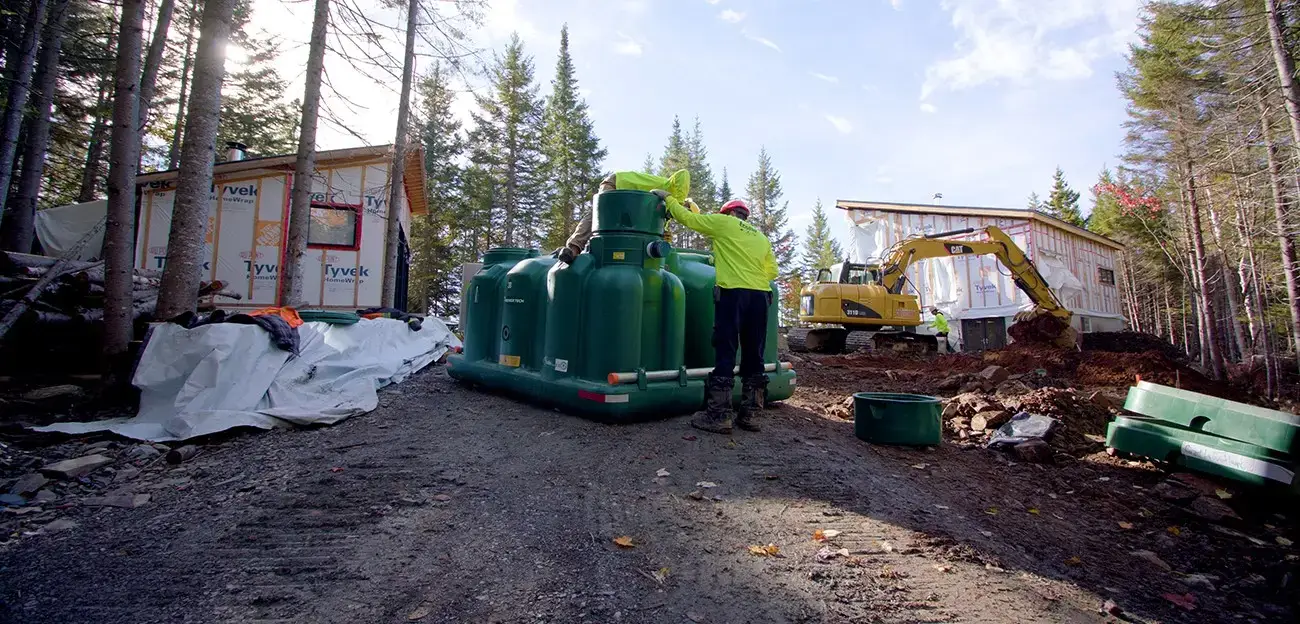
A percolation test measures how quickly water drains through your soil. It’s usually done by a soil scientist, engineer, or another accredited professional.
For properties not connected to a municipal sewer, on-site septic systems handle wastewater treatment in stages. Many systems discharge effluent into soil for final purification. Natural microorganisms in the soil break down contaminants before water reaches groundwater or nearby water sources.
The catch is that soil needs to drain at a certain rate to treat wastewater. If it drains too quickly, wastewater passes through before pollutants are effectively removed. If it drains too slowly, wastewater can pool at the surface, creating health risks for you and your family.
Percolation tests confirm if your soil can absorb and filter wastewater properly, which helps protect nearby groundwater and surface water.
What is a good percolation rate for a septic system?
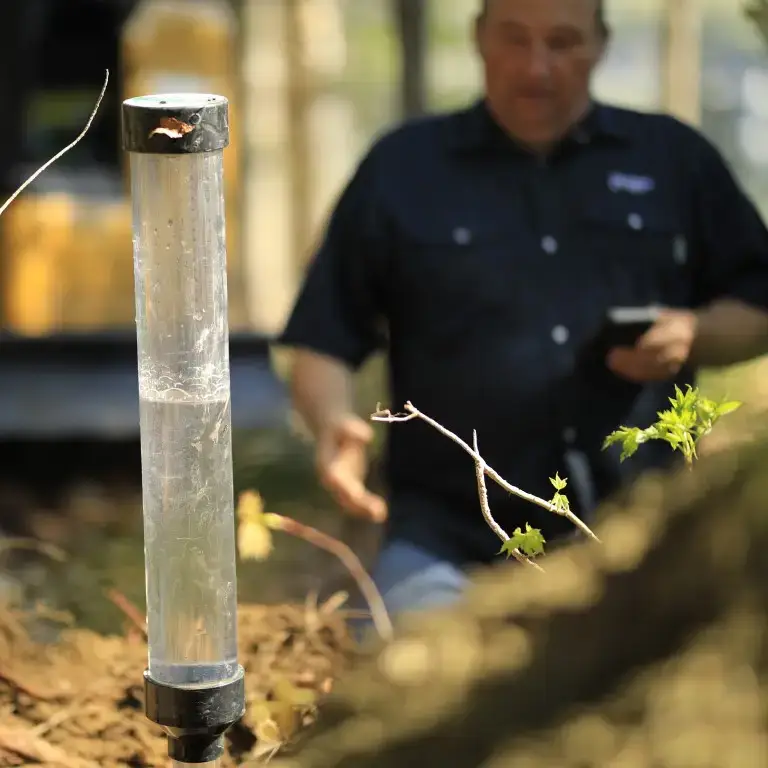
Properties fail perc tests because the soil or site conditions don’t allow wastewater to be absorbed and treated.
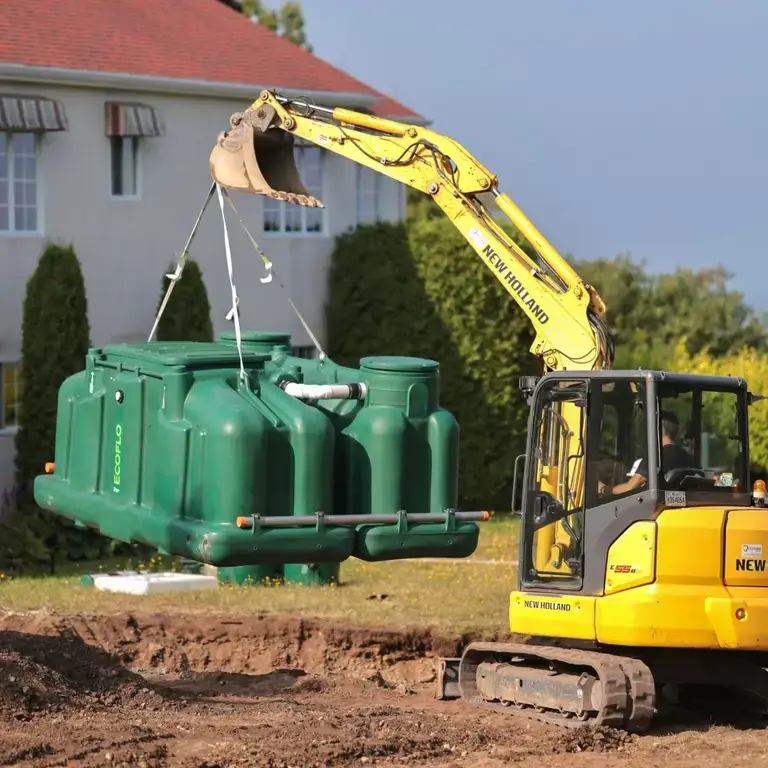
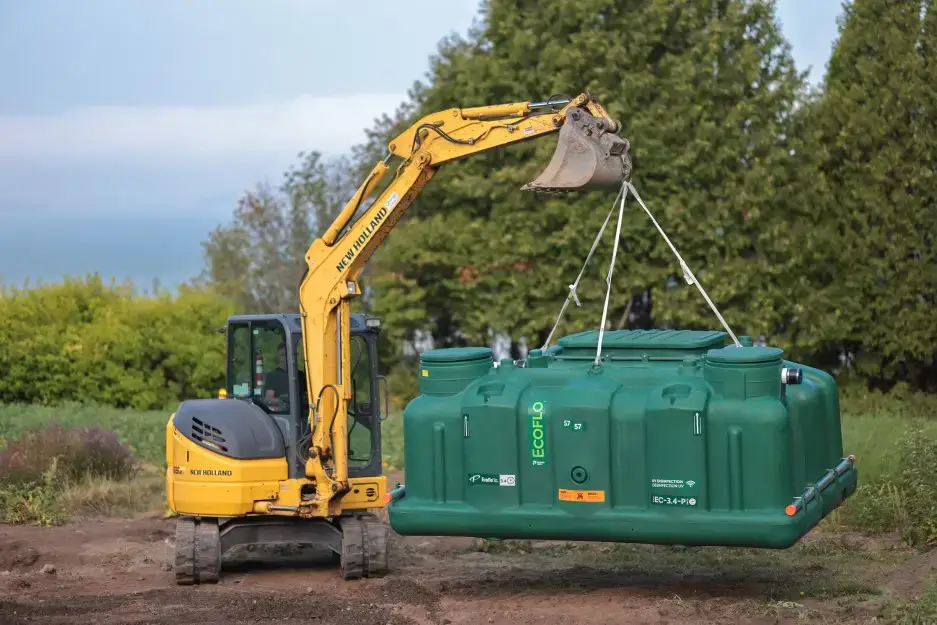
The Ecoflo compact biofilter solves this with its coco filter. The coco filter provides advanced treatment directly within the biofilter unit. This allows the system to safely treat wastewater on any property — even those that fail a perc test.
In certain cases, the Ecoflo compact biofilter can bypass soil entirely by discharging effluent to a stream or ditch. This is typically done by adding our UV disinfection unit, which can be integrated directly inside the Ecoflo tank.
Resilience to clay and high water tables
Properties with failed perc tests often have clay soil or high water tables. These conditions not only limit the land’s ability to drain wastewater but can also create challenges for septic installations. Clay can compress over time, putting pressure on system components. High water tables can shift systems and stress pipe connections.
The Ecoflo compact biofilter has concrete models that are designed to handle these challenges. Their structural strength withstands the pressure of clay soil, and their weight keeps the system firmly in place when water tables rise.

The heart of the Ecoflo compact biofilter: a filter made of 100% natural, renewable, and compostable coco fragments.
In Iowa, flatbed biofilters are a popular septic system for land that doesn’t perc.
These systems pump wastewater from the septic tank into the biofilter. A nozzle inside the biofilter distributes wastewater across a synthetic filter. The filter removes wastewater contaminants and effluent is sent to a stream or ditch for final dispersal.
Flatbed biofilters offer many of the same benefits as the Ecoflo compact biofilter. Still, there are a few key reasons why Ecoflo stands out.
- Simple, non-mechanical components
Flatbed biofilters depend on pumps to spread wastewater over their filter. If the pump fails or there’s a power outage, the system can’t treat wastewater until the problem is repaired.
The Ecoflo compact biofilter takes a simpler approach. It uses a non-mechanical tipping bucket that automatically distributes wastewater across the coco filter. With no pump required for treatment, Ecoflo gives you 24/7 performance in all conditions.
- A warranty with no time limit
In Iowa, the leading flatbed manufacturer’s warranty ends after 20 years — no exceptions.
The Ecoflo compact biofilter, on the other hand, comes with a 10-year performance warranty that resets each time you renew the filter. This means your coverage can be extended indefinitely, protecting your system’s performance for as long as you own it.
- Easy access to important records
Flatbed biofilter manufacturers don’t keep track of your system’s installation or service records. Instead, your installer and maintenance provider each keep their own files. With different companies managing information in different ways, there’s no guarantee you’ll be able to access your records when you need them.
Premier Tech, the manufacturer of the Ecoflo compact biofilter, provides easy access to an online platform where all your records are stored in one place.

The Ecoflo compact biofilter uses a non-mechanical tipping bucket to spread wastewater over the coco filter.
Aerobic treatment units are a popular option for properties that fail a percolation test in New Jersey.
These systems treat wastewater in three steps:
- Wastewater enters the unit’s first compartment, which clarifies wastewater by separating solids from liquids.
- The second compartment uses an air pump to promote the growth of bacteria, which feed on wastewater pollutants.
- Remaining solids settle in the third compartment, and treated wastewater is sent downstream for final dispersal.
While aerobic treatment units address some of the challenges of a failed perc test, the Ecoflo compact biofilter offers advantages that make it a better long-term solution.
- Lower operating costs
Aerobic treatment units rely on an air pump to treat wastewater. The pump needs to run continuously, leading to higher energy bills over time.
By comparison, the Ecoflo compact biofilter requires no electricity for treatment. If a pump is needed to move effluent downstream, energy use is minimal. When installed without a pump, it operates passively with no running costs. Either way, Ecoflo is a better long-term investment.
- Reliability for seasonal use
Aerobic treatment units rely on a constant flow of wastewater to keep bacteria alive. During periods of non-use, the bacteria can die. When wastewater enters the system again, it may not be treated effectively until the bacterial population recovers.
Seasonal properties are sometimes left unused for long periods. If your system relies on an aerobic treatment unit, it may not perform as expected when you return.
That isn’t a problem with the Ecoflo compact biofilter. Its coco filter maintains a humid environment that supports bacteria year-round, even during periods of non-use. Such consistent performance makes the system perfect for cabins and other seasonal properties.

Unlike aerobic treatment units, the Ecoflo compact biofilter offers exceptional performance even after periods of non-use.