Is a sand mound septic system really your only option?
Last updated on March 16, 2026
If your property has high groundwater or poor soil, you may have been told that a sand mound septic system is your best option. Sand mounds are a reliable solution, but they require a lot of space. And let’s face it — they don’t look very nice.
The good news? There's a proven alternative that takes less space and helps you avoid an unsightly mound in your yard. It’s the Ecoflo compact biofilter.
In this article, we'll explain what a sand mound is and why one might be recommended for your property. We'll also cover the system's pros and cons and show you why the Ecoflo compact biofilter is the best alternative.
Sand mound systems are used to treat household wastewater when a conventional septic system can't be installed. They're often recommended for properties with:
- Challenging soil conditions
Clay-heavy soil, shallow bedrock, and poor drainage can prevent wastewater from properly filtering underground. A sand mound creates a treatment area above your existing soil, bypassing the problem entirely.
- High water tables
When groundwater sits close to the surface, it can interfere with a traditional system’s treatment process. A sand mound is built above your existing soil using suitable fill material, so it delivers effective treatment regardless of the water table.
- Strict environmental regulations
Properties near protected streams, lakes, or rivers are often subject to strict water quality regulations. A conventional system may not provide a sufficient level of treatment. In many cases, sand mounds can meet these higher standards.
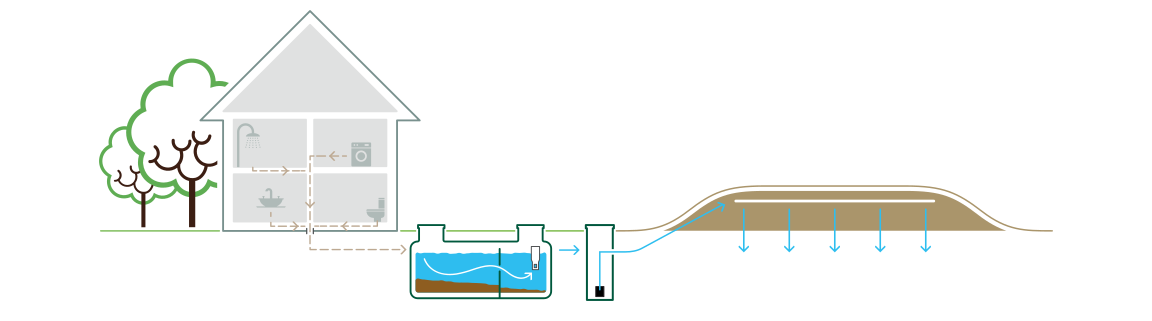
Unlike traditional in-ground septic systems, sand mounds rely on a raised bed of sand to provide additional treatment before wastewater reaches native soil.
Here's how the process works, step by step:
- Wastewater from your home flows into your septic tank, where solids settle and separate from liquids.
- Clarified wastewater moves into a pumping tank, which sends controlled doses to the top of your sand mound.
- At the top of your sand mound, perforated pipes evenly distribute wastewater across a layer of gravel.
- Wastewater filters through the gravel and into a layer of sand, where the bulk of treatment takes place.
- Wastewater enters native soil, which completes the final stage of treatment.
- Treated water returns to groundwater and the surrounding environment.
Like any septic system, a sand mound is a significant investment. Here’s what you need to know before you commit to one.
Advantages of sand mounds
When correctly designed and installed, sand mounds have points in their favor:
- proven and widely used
- excellent treatment performance when properly maintained
- excavation is limited to your septic tank and pumping tank, unlike conventional installations
- approved by local authorities in many states, including Illinois, Iowa, New Jersey, New York, Pennsylvania, and Vermont
The downside of sand mounds
Sand mounds also come with some drawbacks that are worth considering:
- highly visible above ground
- take a lot of yard space
- sensitive to increased water usage
- difficult to maintain due to inaccessible design
- cannot be refurbished at end of life — replacement is the only option
If a conventional septic system isn't right for your property, a sand mound isn't your only option.
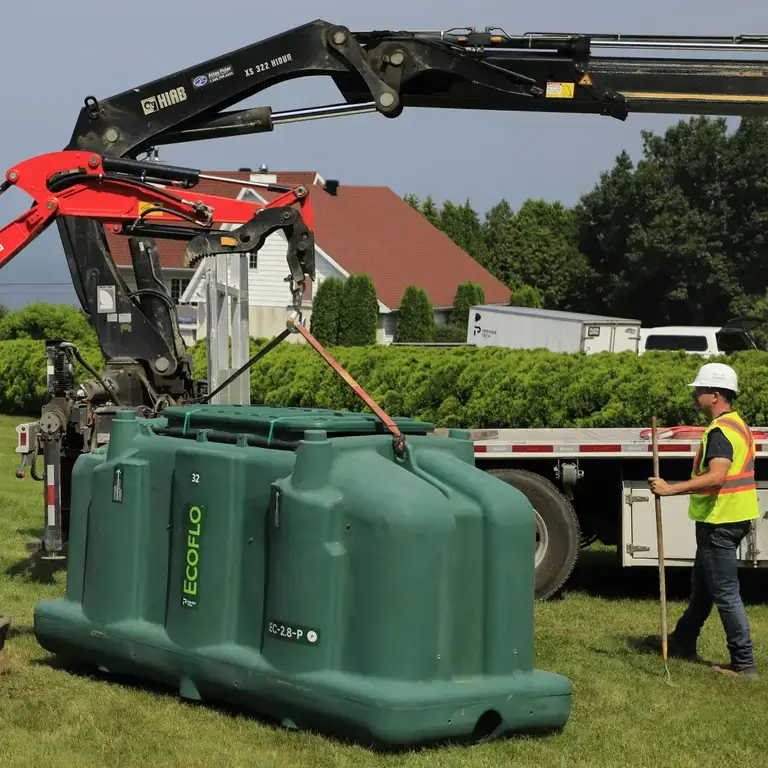
The Ecoflo compact biofilter from Premier Tech Water and Environment is built for the same challenging conditions as a sand mound. But it's smaller, more discreet, and built to last.
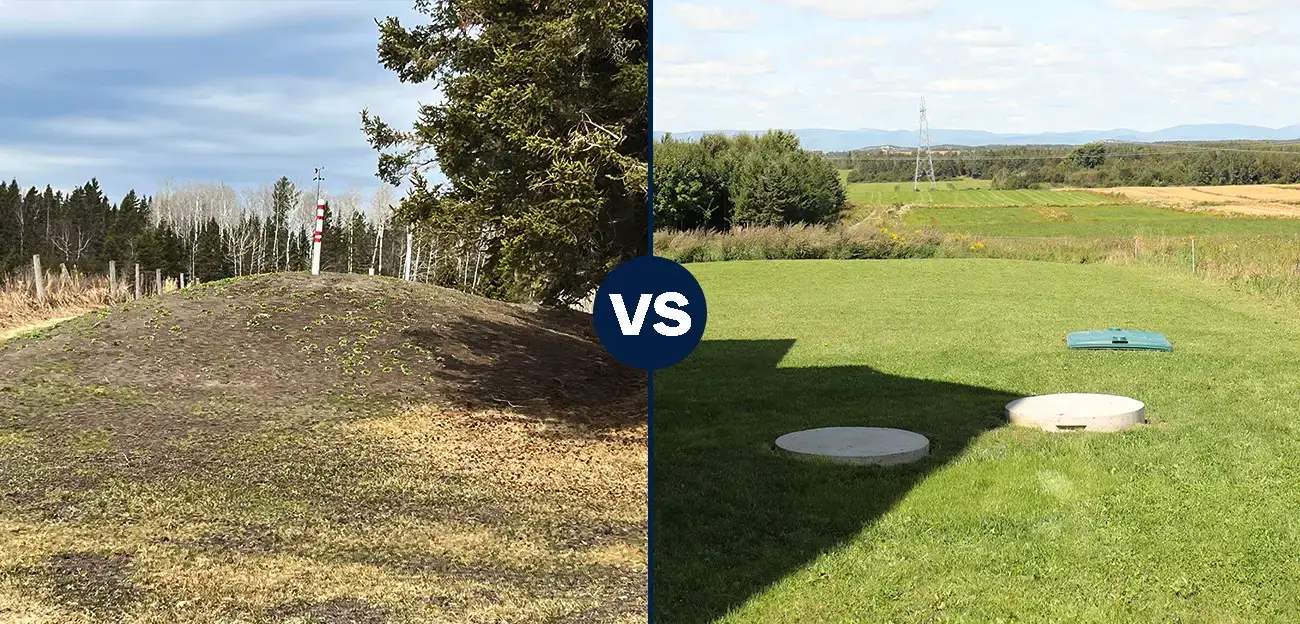
Footprint and visual impact
A sand mound is exactly what it sounds like. It’s a large mound of sand in your yard. It's hard to miss and even harder to hide.
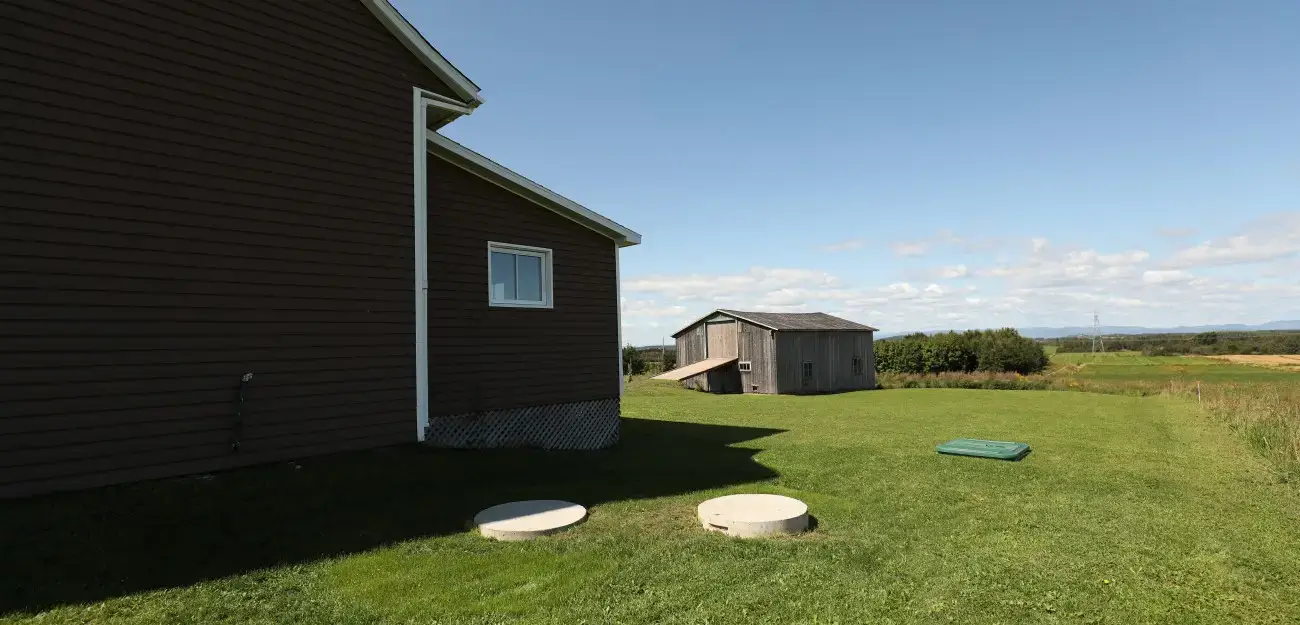
The Ecoflo compact biofilter requires significantly less space and sits much lower to the ground, blending naturally into your yard.
Ease of maintenance
A sand mound can't be opened or accessed, making it difficult to troubleshoot or service. When a treatment layer clogs, full replacement is often the only option.
The Ecoflo compact biofilter has a lid for easy inspections. Individual components can be replaced as needed, so a single issue never means replacing the entire system.
System life expectancy
Sand mound systems typically last 20 to 25 years. When they fail, the entire system needs to be replaced.
The Ecoflo compact biofilter is designed to last a lifetime. Its coco filter has a lifespan of up to 15 years or more with proper use and regular maintenance. When it's time for a renewal, a technician simply opens the lid, removes the old filter, and installs a new one. Your yard stays untouched, and you avoid the cost and hassle of a full system replacement.
Total cost of ownership
For most properties, the cost to install a sand mound or the Ecoflo compact biofilter is roughly the same. The real difference shows up over time.
With a sand mound, you're likely facing a full system replacement within 20 to 25 years. Over that same period, the Ecoflo compact biofilter requires only routine annual maintenance and a filter renewal. That's a fraction of the cost of a full system replacement.
If you've been told you need a sand mound, your property likely has challenging soil, a high water table, or sits near a sensitive water source.
The Ecoflo compact biofilter is designed for exactly these conditions. But unlike a sand mound, it has a small footprint, sits low to the ground, and is built to last a lifetime without ever needing a full replacement.
Is Ecoflo always a no-mound septic system?
Not always. Although Ecoflo is designed to be a no-mound system, local regulations sometimes require it to be installed with a mound.
Even then, the Ecoflo septic system has a lower profile than a traditional sand mound. And because it's a permanent installation, you'll never need a full system replacement.
Is the Ecoflo compact biofilter more expensive than a sand mound?
No. Installation costs for the Ecoflo compact biofilter and a sand mound are usually about the same. The difference shows up over time.
A sand mound has a lifespan of 20 to 25 years, after which the entire system needs to be replaced. The Ecoflo compact biofilter is designed to last a lifetime. Its coco filter has a lifespan of up to 15 years or more with proper use and regular maintenance. It can be renewed at a fraction of the cost of a full system replacement.
Over a full life cycle, the Ecoflo compact biofilter is the more economical choice.
I already have designs for a sand mound system. Is it too late to switch to Ecoflo?
Not at all. If the Ecoflo compact biofilter is approved in your area, switching is straightforward. Our team will update your design plans free of charge. After we’re done, all you need to do is ask your local health department for a new installation permit.
Is Ecoflo easier to install than a sand mound?
Yes. The Ecoflo compact biofilter requires less material than a sand mound, which means fewer truckloads to your property. It also comes in pre-configured models, making the installation process faster and more straightforward.
Can the Ecoflo compact biofilter replace a failing sand mound?
Not directly. Once a sand mound has failed, the ground beneath it can't be used for another septic system. This can make it hard to find another location, especially if space is already an issue.
That's where the Ecoflo compact biofilter shines. Its smaller footprint makes it easier to find an installation area, even on properties where space is limited.