Is it possible to have a septic system without a drain field?
Last updated on April 18, 2026
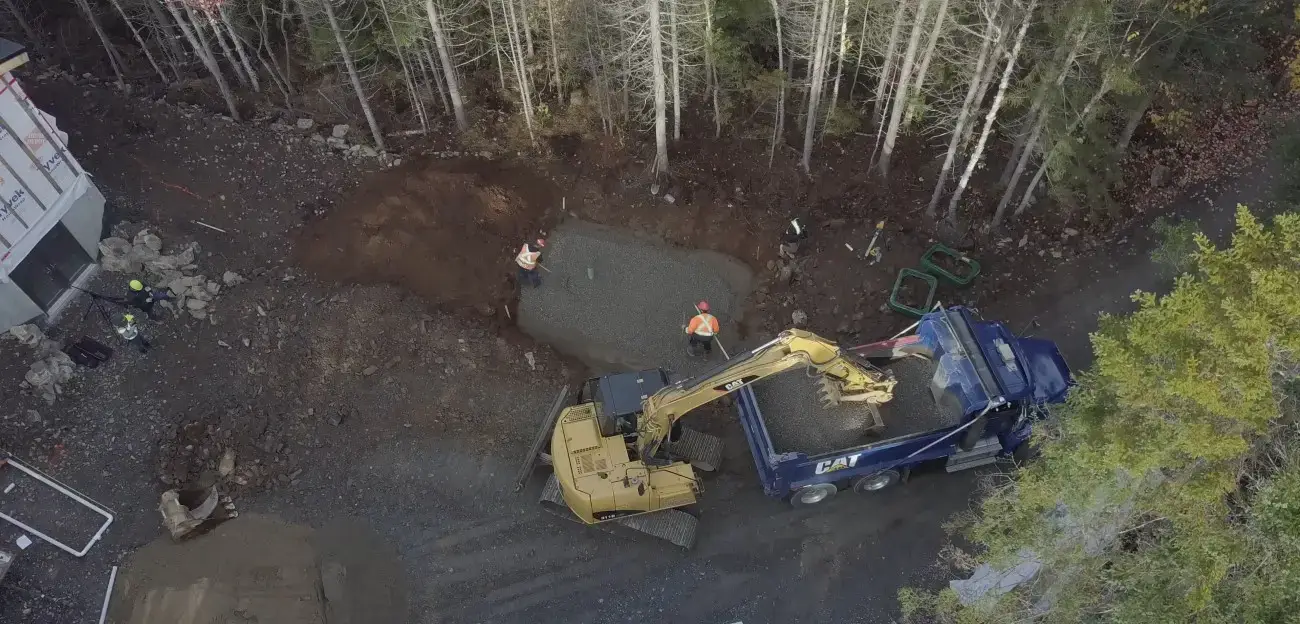
A conventional septic system works in two main stages:
- Septic tank
Your septic tank receives wastewater from your home. It separates solids and scum from liquid wastewater. Solids stay in the tank and are removed during regular pumping. Liquid flows out through a pipe to your drain field. - Drain field
Your drain field — sometimes called a leach field — finishes the treatment process. It allows liquid wastewater to filter through your soil, where bacteria remove pathogens and contaminants. By the time the water reaches groundwater, it's safe for the environment.
A conventional septic system can't fully treat wastewater without a functioning drain field. That's why virtually every state requires one.
Reasons why a standard drain field might not be possible on your property
Installing a drain field is straightforward for many property owners. For others, site conditions make it a real challenge — or rule it out entirely.
Here are the most common reasons:
- Limited space
Your property may be small or irregularly shaped, leaving no room for a drain field that meets local regulations. - Challenging soil conditions
If your property is rocky or clay-heavy, wastewater may take too long to infiltrate into the ground. If you have coarse sand or gravel, wastewater may drain too quickly, sending it to groundwater before it has been fully treated.A percolation test — or perc test — will give you the answer. It's a required step for a new septic system in most areas. If your soil's percolation rate is too slow or too fast, it falls outside the range required for a standard drain field. At that point, you have it in writing: a conventional system isn't an option, and you need an alternative. - Environmental restrictions
Local authorities set minimum distances between septic system components and features like wells, watercourse, buildings, and property lines. Your site may not meet those requirements, regardless of your soil conditions.
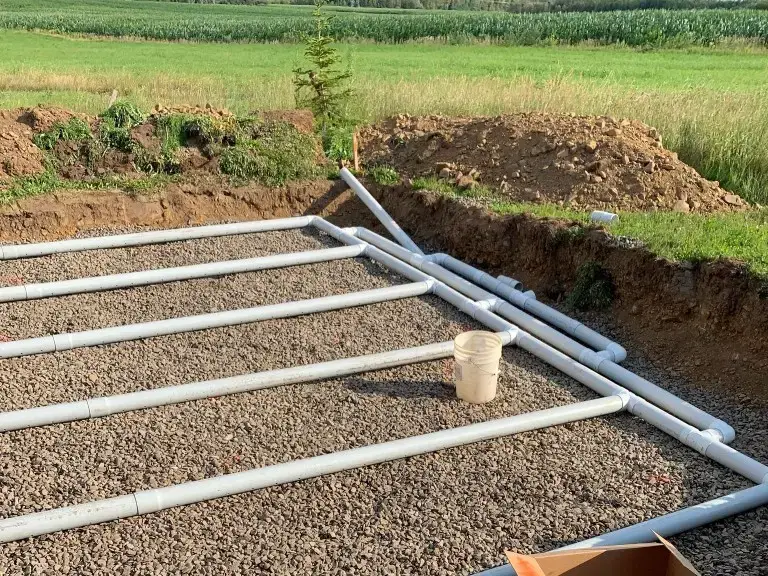
Drain field installation for a conventional septic system.
If a standard drain field isn't possible, you still have options. Depending on your site, your budget, and your location, there are a few paths forward. Some may be more practical than you think.
Connect to the municipal sewer
In theory, connecting to the public sewer system is a possibility. But in practice, many rural properties in the US are too far from the nearest sewer line for this to be realistic. When a connection is possible, hook-up costs can run high.
Reduce the size of your drain field
An advanced septic system treats wastewater to a higher standard than a conventional installation, which means the drain field can be smaller. For many properties with limited space, this is the difference between a project that works and one that doesn't.
Mound systems are popular alternatives in this situation. The problem is that they need a lot of space and leave a large, permanent mound on your property.
If an advanced septic system is the right path for your site — or if you're already considering a mound system — it's worth looking at your options
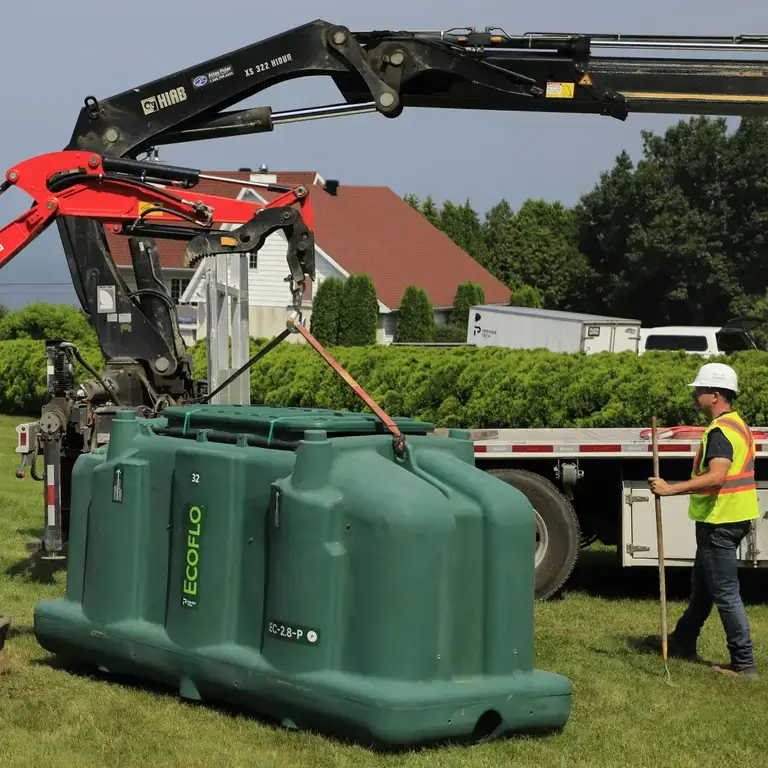
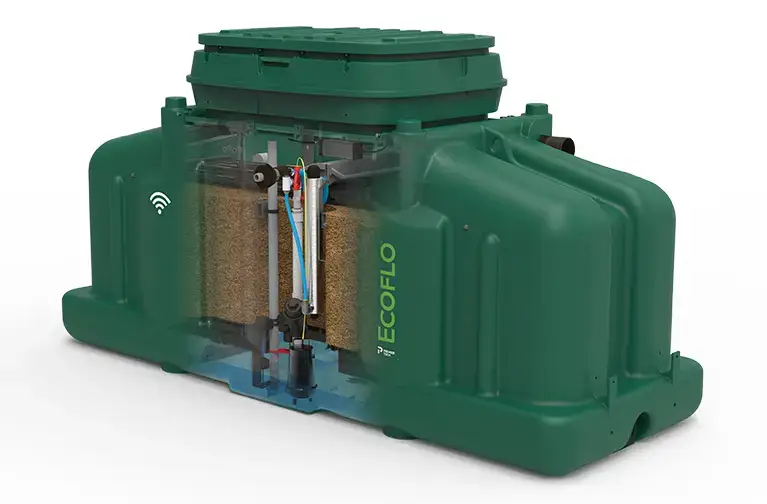
Take the Ecoflo compact biofilter, for example. It can be installed with a smaller drain field than traditional systems, and unlike a mound system, it won't change the look of your yard.
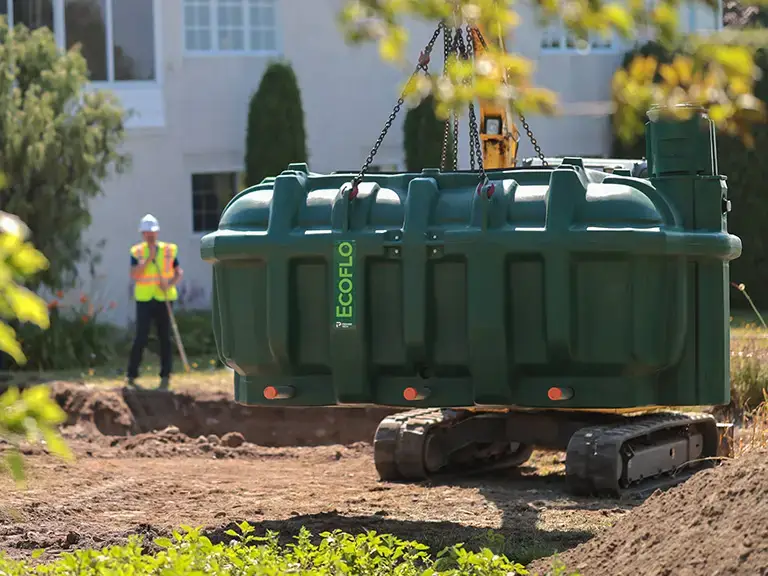
The Ecoflo compact biofilter can reduce the size of your drain field or help you eliminate it entirely.
If a conventional drain field isn't right for your site, the first and most important step is to talk to a septic expert.
For decades, Premier Tech has helped homeowners handle exactly these situations. Whether you're dealing with a failed perc test, a small lot, or a site where a drain field isn't an option, we'll help you find a solution that works for your property and meets your local regulations.
Our support is free, with no obligation, and it covers your project from your very first question through to completion.