Your guide to buying or selling a home with a septic tank

Last updated on 5 May 2026

Daniel Espley, General Manager of Premier Tech Water and Environment in the UK.
Daniel Espley
General Manager at Premier Tech Water and Environment - UK
Buying a house with a newly installed septic tank in the United Kingdom.

Around 500,000 UK homes rely on an off-mains drainage system to treat their wastewater. If you're buying or selling a rural property, there's a good chance one of those systems is included in your transaction.

For most people, it's unfamiliar territory. How does the system work? What are your responsibilities? What should you check before you buy, or disclose before you sell?

This guide answers all of that, in plain language, so you can move forward with confidence.

What is an off-mains drainage system?

If your home is connected to the public sewer, you don't need to think much about where your wastewater goes. It disappears down the drain and the water company takes care of the rest.

In rural areas, that connection often doesn't exist. Instead, wastewater from your home is treated and dispersed on your own property — or a neighbouring one — using a private drainage system. These are commonly called off-mains drainage systems, septic systems, or private drainage systems. They all refer to the same thing.

Types of off-mains drainage systems

Not all off-mains systems are the same. Here are the three main types you're likely to encounter as part of a property transaction.

Septic tanks

A septic tank is perhaps the best-known component of an off-mains system in the UK.

Household wastewater flows into the tank, where solids settle to the bottom and liquids separate out. The liquid then flows out of the tank into a drainage field, where a series of pipes spread it into a bed of soil and gravel for further treatment.

Septic tanks don't treat wastewater to a high standard on their own, which is why the drainage field plays such an important role. They require regular emptying — typically once a year — to remove the accumulated solids.
 

Sewage treatment plants

A sewage treatment plant — sometimes called a package treatment plant — goes a step further than a septic tank.

It actively treats wastewater to a higher standard before discharging it, producing cleaner effluent that can often be released to a watercourse as well as a drainage field.

Treatment plants vary in how they work. Some use a mechanical or electrical process to aerate and treat wastewater. Others use a purely biological process with no moving parts and no electricity. Either way, they need regular servicing to keep them working properly.
 

Cesspits and cesspools

A cesspit — also called a cesspool — is simply a sealed underground tank that collects wastewater without treating or discharging it. There is no drainage field.

The tank fills up and needs to be emptied regularly — sometimes every few weeks, depending on usage.

Cesspits are the most expensive type of system to maintain over time, and they're increasingly rare in new installations. If a property has one, it's worth understanding the emptying costs before you commit.
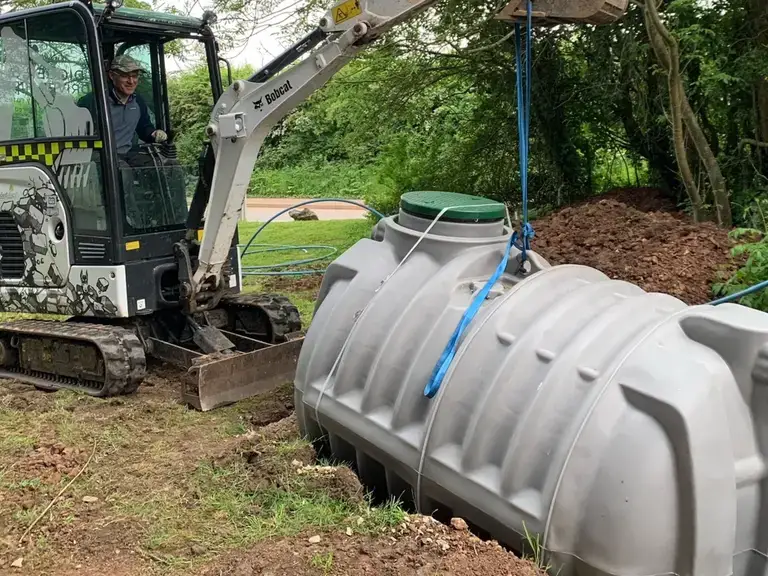
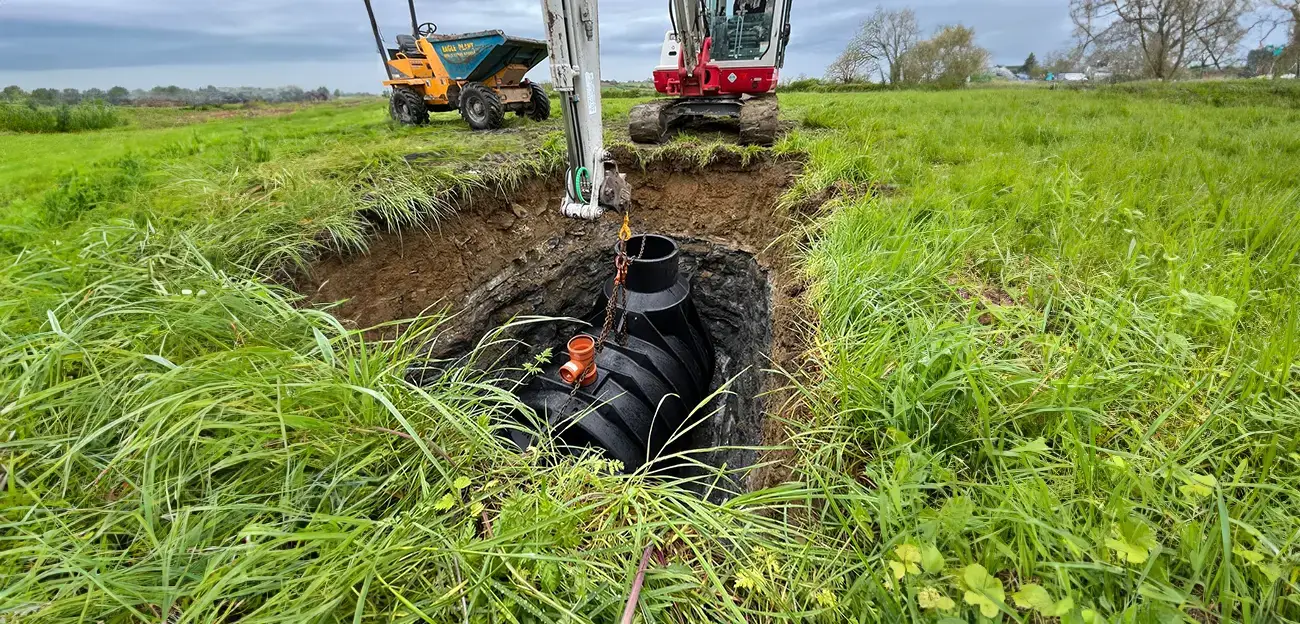
Installation of a rewatec septic tank

Septic tank installation for an off-mains property.

Buying a property with a septic system

A standard building survey won't tell you much about the off-mains drainage system that comes with a rural property. But the system matters and understanding it before you exchange contracts can save you from an expensive surprise down the line.

What to check before you buy

The most important question to ask about any off-mains system is whether it complies with the General Binding Rules — the regulations that govern how private drainage systems can discharge wastewater in England and Wales.

Since January 2020, septic tanks are no longer permitted to discharge directly to surface water such as rivers, streams, or ditches. Systems that do must be upgraded or replaced.

A system that doesn't comply can affect your mortgage, complicate your transaction, and leave you facing significant costs after you've moved in.

Before you exchange, make sure you know:

  • what type of system the property has
  • whether it meets current regulations
  • when it was last emptied and serviced
  • whether there is a drainage field, and if so, whether it's in good condition
  • whether the system is shared with another property
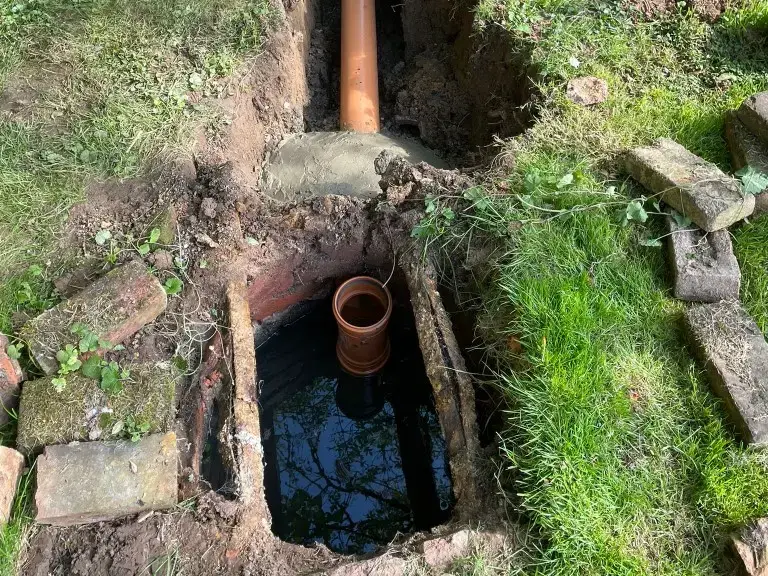
Non-compliant septic tank with piping to a drainage field.

A septic tank that is no longer compliant with UK regulations.

Shared systems and easement rights

Some properties share a septic system with one or more neighbouring properties. This is more common than you might think, particularly in older rural developments.

A shared system means shared costs and shared responsibility. Before you buy, check whether there is a formal written agreement in place covering maintenance, costs, and access. If there isn't, ask your solicitor to put one in place before you complete.

You'll also need easement rights — legal permission to access the system for maintenance and repairs, even if it sits on a neighbour's land. These should be documented in the property deeds. If they aren't, your solicitor can arrange for them to be added.

Pre-purchase septic surveys

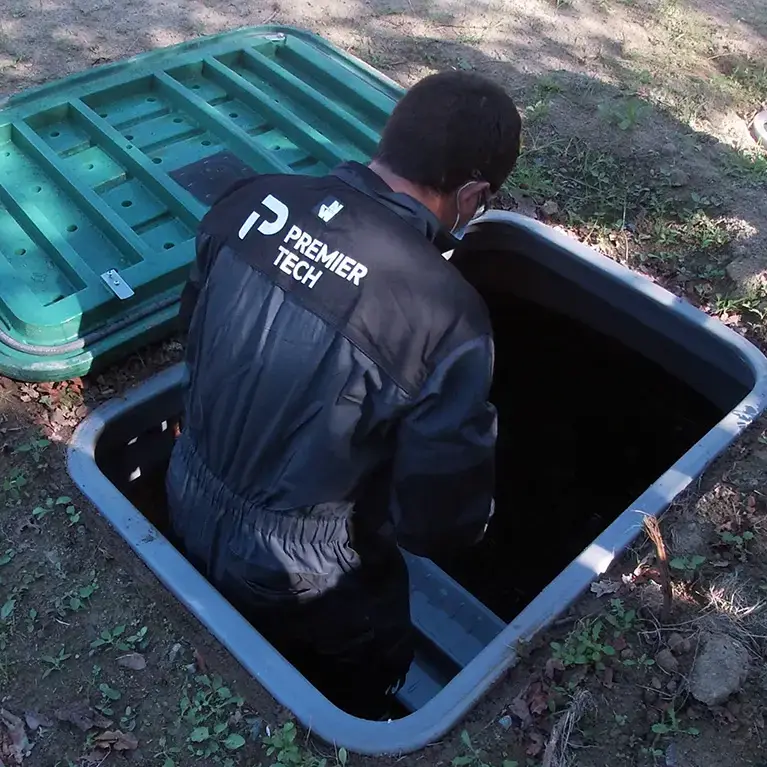
A pre-purchase septic inspection is the single most important step you can take before buying a property with an off-mains system.

It's separate from a standard building survey and covers the condition of the system, its compliance with current regulations, and any work that may be needed.

Think of it as an MOT for the drainage system. Without it, you're buying blind.

The cost of an inspection is modest compared to the cost of inheriting a system that needs replacing. And if the inspection does reveal problems, you're in a much stronger position to negotiate — or walk away — before it's too late.

Have the off-mains system
inspected before you buy

Request a septic survey

Who pays for the survey and any remedial work?

In most cases, the buyer requests and pays for the survey as part of their due diligence. Some sellers arrange a survey before listing, which can support their asking price and speed up the sale.

If the survey identifies issues, the cost of any required work is usually factored into negotiations. The seller might carry out the work and maintain their asking price, or reduce the price to reflect the cost of upgrades.

Selling a property with a septic system

If you're selling a rural property, the off-mains drainage system is something you'll need to address — ideally before you list, rather than mid-transaction.

Your obligations as a seller

As a seller, you are required to disclose the existence and condition of your drainage system to prospective buyers.

The standard Law Society property information form — the TA6 — includes specific questions about drainage arrangements. Answer them honestly and fully.

If your system is non-compliant, the expectation is that you address it before completion, either by upgrading the system or by agreeing with the buyer how the cost will be handled. A non-compliant system discovered mid-transaction can delay or derail a sale.

The best approach is to get ahead of it. A survey before you list gives you a clear picture of where you stand and puts you in control of how any issues are resolved.

Get a clear picture of your
system before you sell

Request a septic survey

Compliance and the General Binding Rules

The General Binding Rules set out the conditions that off-mains systems must meet to operate legally without an environmental permit.

The key rule for septic tanks: since January 2020, they are no longer permitted to discharge directly to surface water such as rivers, streams, or ditches. They must discharge to a drainage field instead.

If your septic tank currently discharges to surface water, it isn't necessarily a case of replacing the whole system. In many cases, adding a secondary treatment system — like our Ecoflo biofilter — can bring your system into compliance.

Knowing your compliance status before a buyer raises the question is always better than finding out under pressure.

Your responsibilities as an off-mains homeowner

Whether you've just bought a property with a septic system or have owned one for years, understanding your ongoing responsibilities is important.

Regular maintenance and emptying

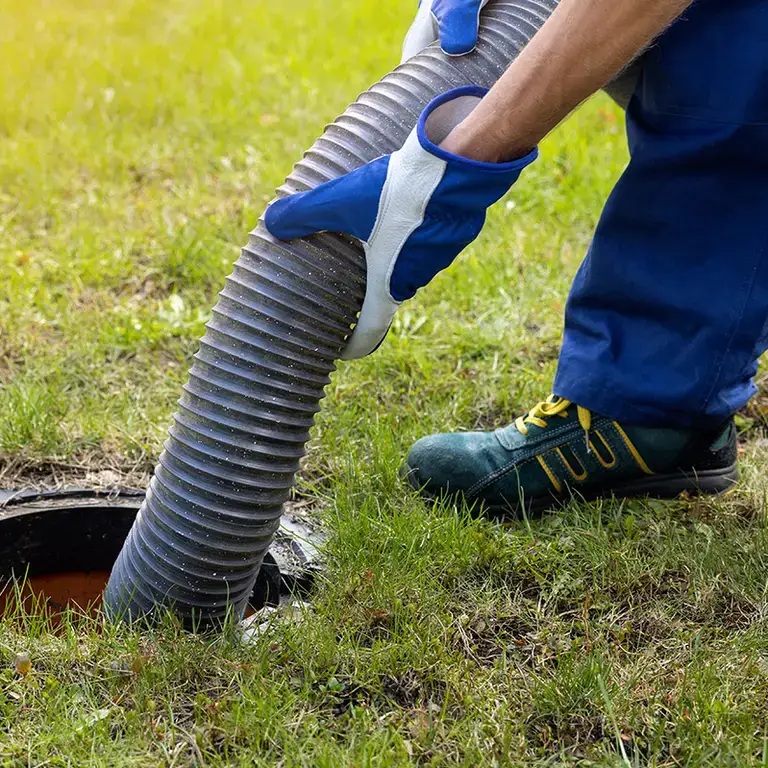
A septic tank typically needs emptying once a year, though this depends on the size of the tank and how many people use it. Neglecting this leads to a build-up of solids that can block the system, damage the drainage field, and cause costly problems down the line.

Sewage treatment plants need servicing regularly — usually annually — to check mechanical components, measure sludge levels, and ensure the system is treating wastewater properly. Many manufacturers require annual servicing to keep the warranty valid.

What not to put down the drain

An off-mains system relies on bacteria to break down waste. Certain products can disrupt or kill those bacteria, and once their balance is disturbed, your system can struggle to recover.

As a general rule, avoid flushing or draining:

  • wet wipes, even if they're labelled "flushable"
  • fats, oils, or grease
  • harsh cleaners or bleach
  • household chemicals like paints, varnishes, thinners, or pesticides
  • sanitary products or nappies

Need service for your
off-mains system?

Get free advice and a quote

Regulatory compliance

As the owner of an off-mains system, you are responsible for ensuring it complies with current UK regulations. That responsibility transfers to you the moment you take possession of the property, regardless of what the previous owner did or didn't do.

If you're not sure whether your system is compliant, an inspection is the place to start.

Where to get help

Navigating an off-mains property transaction — or taking on a system for the first time — can feel like a lot. But with the right information and the right support, it's more manageable than you might think.

Whether you're buying, selling, or simply trying to understand what you've inherited, we're here to help.

Dock on a lake.

Need help with an off-mains property transaction?

We carry out septic surveys, advise on compliance, and help new owners understand what they've taken on.

Get free service advice

You might find these pages useful

What to do if you're buying or selling an off-mains property